
Home › Tartans › Wallace Ancient
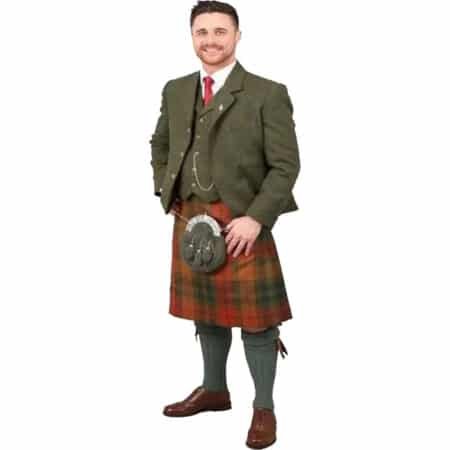
A clan and family tartan, available to order. Everything we make in Wallace Ancient: kilts, kilted skirts, accessories and full Highland outfits, every piece cut to your own measurements.
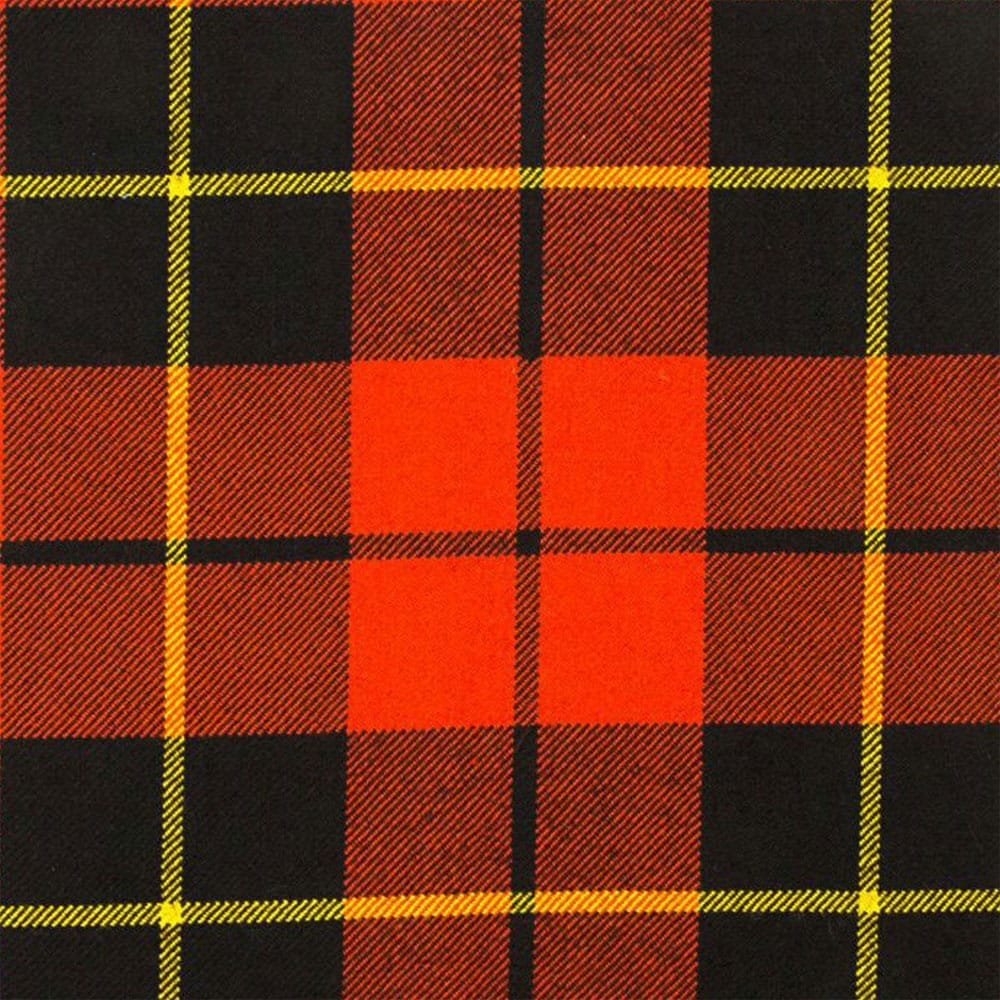
The Wallace Ancient tartan, made to order by Handmade Kilt. Choose it for a kilt, a kilted skirt, an accessory or a full Highland outfit — everything below is cut to your own measurements.
Choose your product
Everything below can be made in the Wallace Ancient tartan. Choose a product, then pick your size and options on the next page — the tartan is already selected for you.
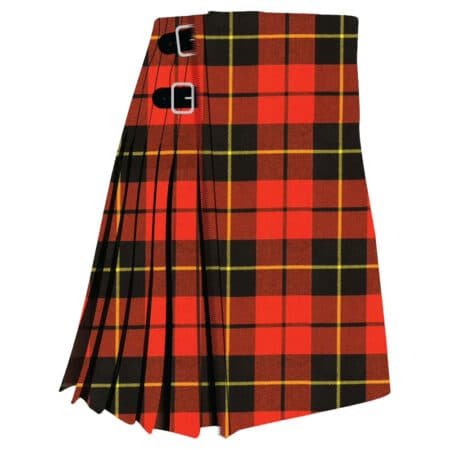
Available in Wallace Ancient
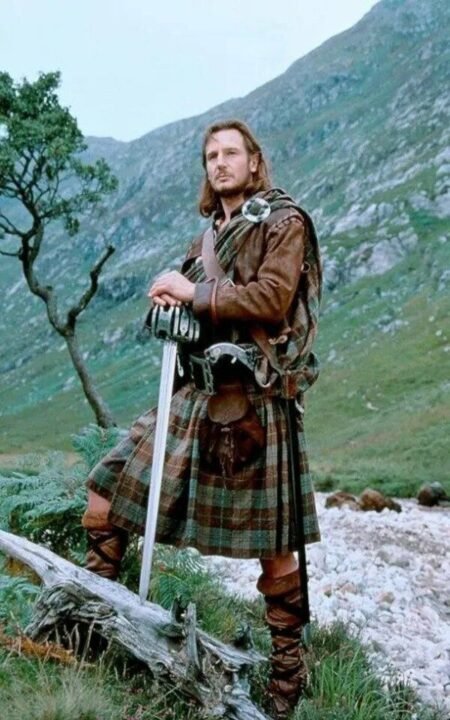

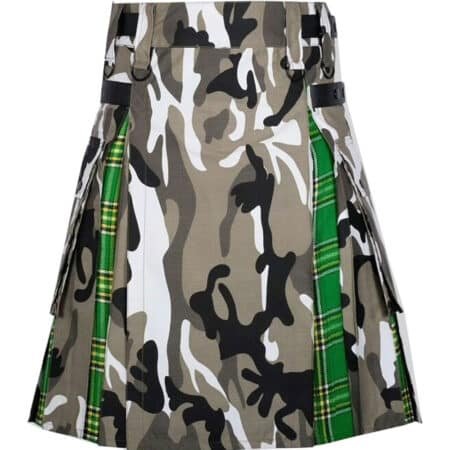

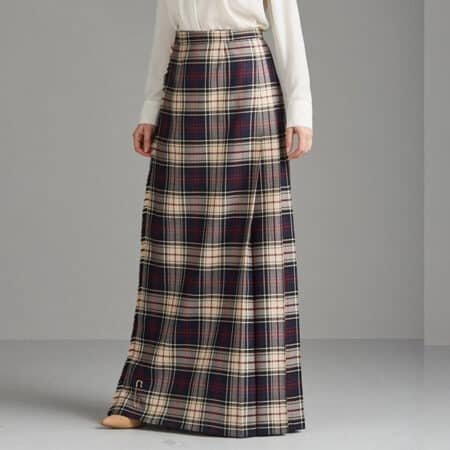
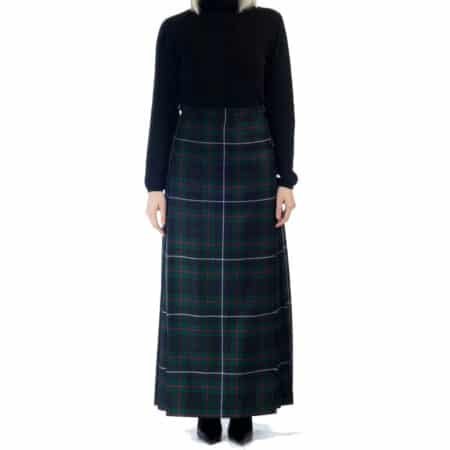

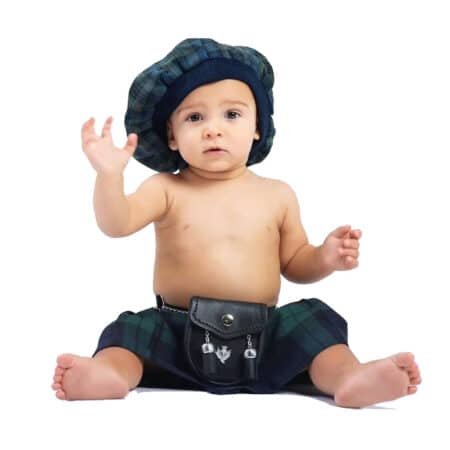
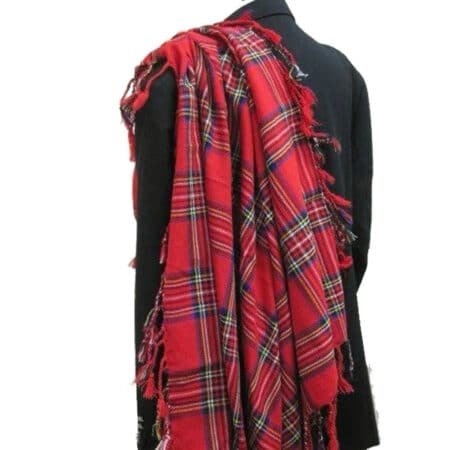


Available in Wallace Ancient
The sett
The surname that became shorthand for Scottish independence began as a label for someone who was not Scottish at all, and the sett now most associated with it first appears in a book that was an outright fabrication.
Wallace descends from forms such as Walensis and le Waleys, meaning Welshman or, more loosely, foreigner; the Old English root is wælisc. Two readings of what that meant in twelfth-century Scotland are defensible. The first has the family arriving from the Welsh march, possibly from around Oswestry, in the wake of the Anglo-Norman settlement under David I. The second treats the word as describing a Briton of Strathclyde, since the Cumbric-speaking population of the south-west was Welsh in exactly the same sense. The documents do not decide between them, and anyone who says the question is settled is choosing a story.
The first identifiable man is Richard Wallace, a follower of Walter FitzAlan, royal Steward from 1136. Richard held land near Kilmarnock as a vassal of the High Steward before 1160, and Riccarton in Ayrshire is generally said to preserve his name, though that is an inference from the place-name rather than a record.
Richard’s descendant Adam Walays had two sons, and the family divides there. The elder line kept the Ayrshire estates and in the late fourteenth century took Craigie by marriage to the heiress of Sir John Lindsay. The younger son Malcolm received Auchinbothie and Elderslie in Renfrewshire, and it is to this branch that clan tradition attaches Sir William Wallace.
The Elderslie attribution is worth examining rather than repeating. The Ragman Roll of 1296 names Alan Wallace, a crown tenant in Ayrshire, and much modern scholarship reads him as William’s father, which would put the family in Ayrshire rather than Renfrewshire. The older tradition, and the monument, favour Elderslie, and the evidence is thin on both sides. What is documented is the career: victory at Stirling Bridge in 1297, knighthood and the guardianship of Scotland, defeat at Falkirk in 1298, capture, and execution at Smithfield in London in 1305.
The Wallaces of Craigie are reckoned the senior branch, and Hugh Wallace of Craigie was made a Baronet of Nova Scotia in 1669. Representation then travelled through heiresses and cadet lines, passing in time to the Wallaces of Cairnhill. Captain Henry Wallace of Busbie and Cloncaird established himself as chief in 1888. Ian Francis Wallace became thirty-fifth chief in 1991 and died on 14 May 2016; Andrew Robert Wallace is the thirty-sixth.
The red-and-black Wallace pattern carries the date 1842, and that date is the point. It is the year of the Vestiarium Scoticum, published in Edinburgh by William Tait with seventy-five coloured plates and offered as the reproduction of a sixteenth-century manuscript from the Scots College at Douay. The compilers were two brothers, John and Charles Allen, who styled themselves Sobieski Stuart and claimed descent from Prince Charles Edward. Neither claim stood up. Walter Scott, writing to Sir Thomas Dick Lauder on 5 June 1829, disputed the whole thing, doubted that Lowlanders had ever worn tartan and picked at the bad Latin of the title; he repeated the objection on 19 November that year. George Skene and Dr Mackay dismantled it in the Quarterly Review in June 1847, and Skene asked to see the original, which was never produced. A surviving copy examined in the 1890s was found by the chemist Stevenson Macadam to have been treated to make the writing look older.
The Wallace plate sat among the Lowland and Border patterns in that book, and the design is a close cousin of the red-and-black check Wilson of Bannockburn sold as Rob Roy. So the sett is not ancient family property. It is a mid-nineteenth-century assignment made by men who were inventing, adopted because the name needed a tartan and there was one on offer. That is not a reason to dislike it, only a reason to describe it accurately.
The green or hunting Wallace has a shorter and cleaner history: it dates from 1980, and it is the pattern recent chiefs have worn themselves. A blue Wallace circulating before 1985 was never recognised, and a former chief said of it, in substance, that it was a good tartan but not a Wallace one.
There is a chief, and his recognition extends to two setts, red and green. Anyone of the name or descended from it may wear either, and the green is the one to choose if you want the chief’s own. Because Wallace is also a common English and Irish surname, plenty of people wear it on the strength of the name alone, and the Vestiarium origin makes any claim of exclusivity hard to argue.
Sources: Clan Wallace Society, Clan Wallace History and Clan Wallace Tartans; Vestiarium Scoticum, Wikipedia, with the Scott and Dick Lauder correspondence of 1829 and the Quarterly Review notice of June 1847; Clan Wallace, Wikipedia; Ragman Roll, 1296; Scottish Register of Tartans.
Near neighbours
The same pattern in different depths of colour. Any of them can be made up in any style above.
All 2,107 tartans are available to order, and any of them can be cut into any style on this page.
 Weathered