Home › Tartans › Farquharson Ancient
A clan and family tartan, available to order. Everything we make in Farquharson Ancient: kilts, kilted skirts, accessories and full Highland outfits, every piece cut to your own measurements.
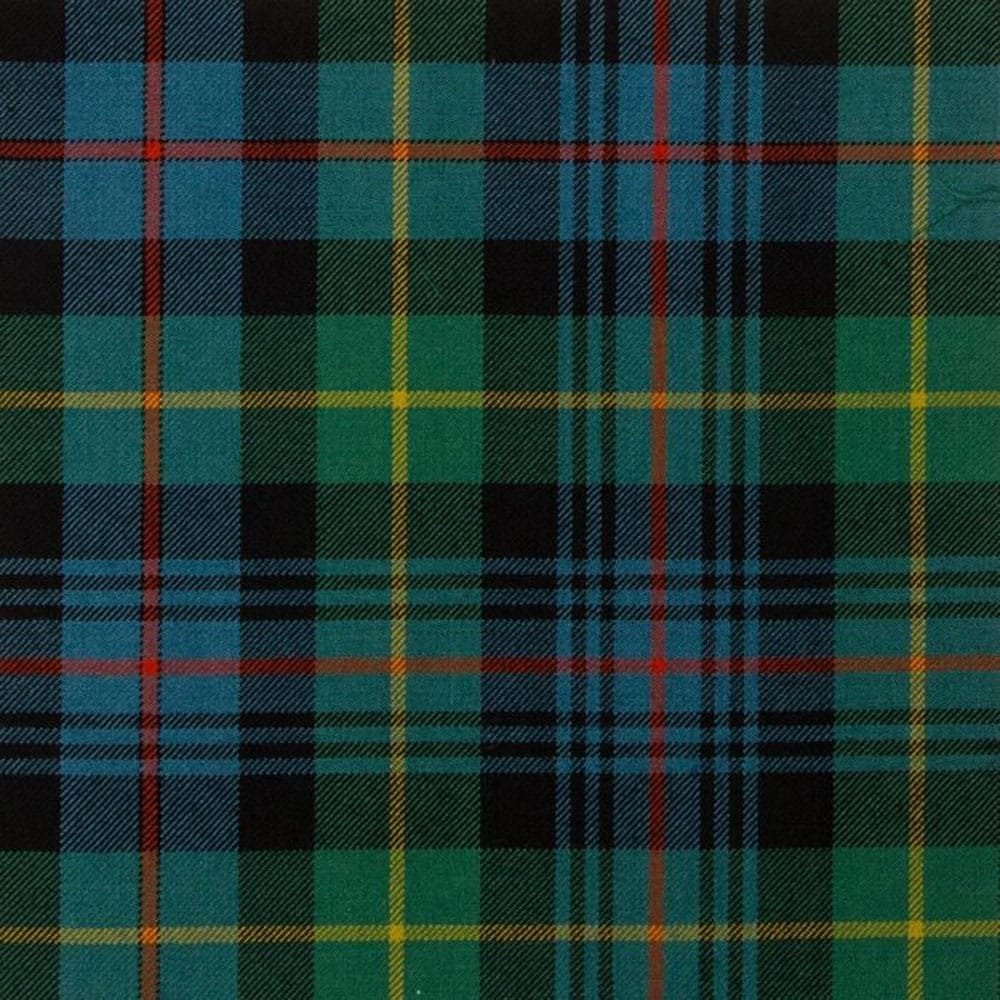
The Farquharson Ancient tartan, made to order by Handmade Kilt. Choose it for a kilt, a kilted skirt, an accessory or a full Highland outfit — everything below is cut to your own measurements.
Choose your product
Everything below can be made in the Farquharson Ancient tartan. Choose a product, then pick your size and options on the next page — the tartan is already selected for you.
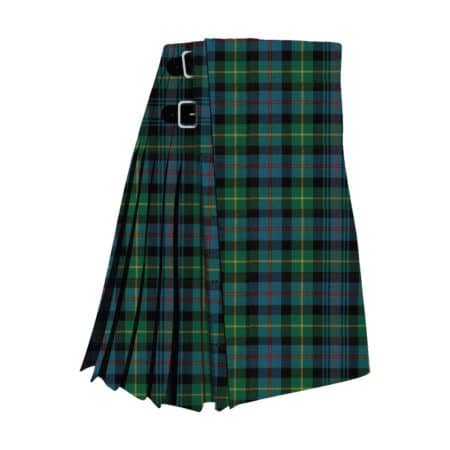
Available in Farquharson Ancient

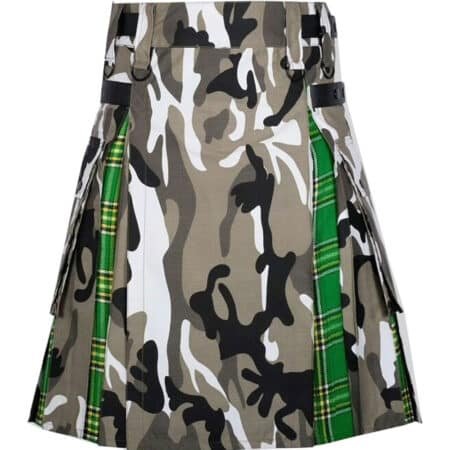

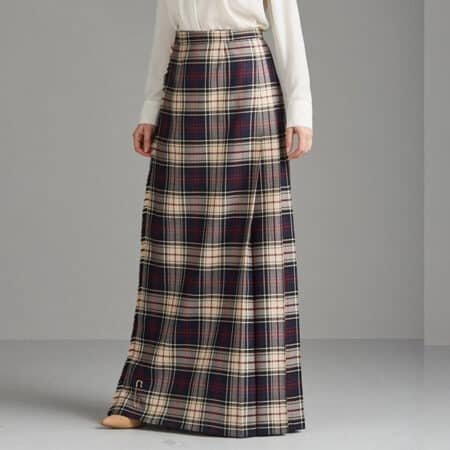
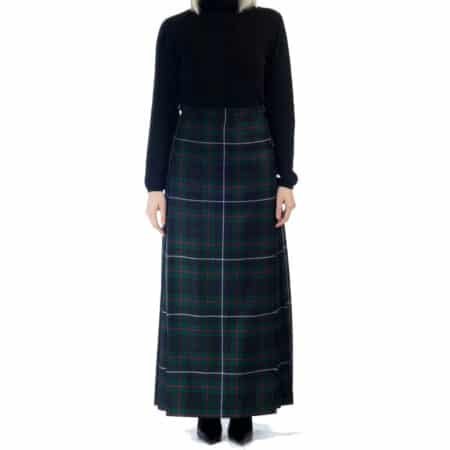

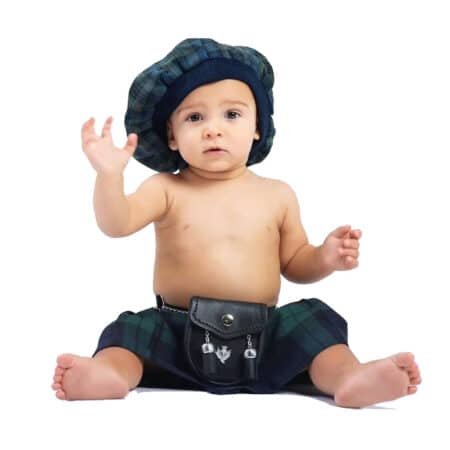


Available in Farquharson Ancient
Available in Farquharson Ancient
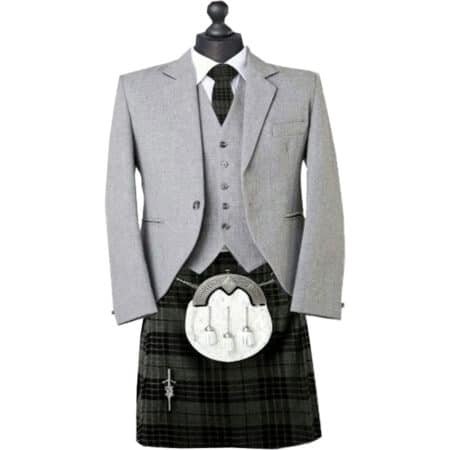
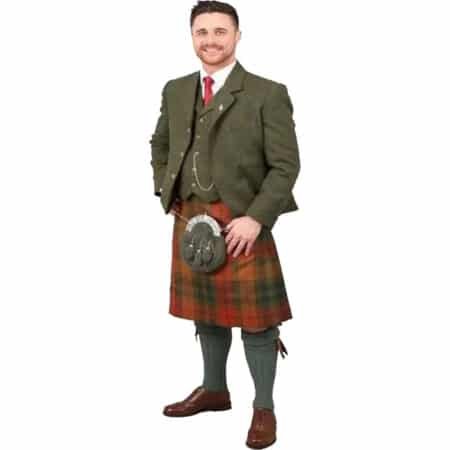
Available in Farquharson Ancient
The sett
A Deeside kindred that took its surname from one man, its lands from a marriage and its political cover from a signed bond, the Farquharsons are one of the few Highland families whose entry into a confederation can be dated.
The name is a patronymic and the clan genealogy is specific about whose. It goes back to Farquhar, a son of Alexander Shaw of Rothiemurchus, known as Alexander Ciar, which makes the Farquharsons a branch of Clan Shaw and so part of the wider Clan Chattan kindred. The Gaelic style of the chief, however, points at a different ancestor: MacFhionnlaigh Mòr, son of the great Finlay.
That Finlay is the man the family actually descends from in any practical sense. Donald, another son of Alexander of Rothiemurchus, married Isobel Stewart, heiress of Invercauld, and it was their son Finlay Mòr who turned a cadet line into a landed one. He carried the royal banner at Pinkie Cleugh in 1547 and was killed there. Two marriages had given him nine sons, and the cadet branches of the name — Monaltrie, Inverey, Whitehouse and the rest — descend from them. It is worth being plain that the descent from Farquhar himself is clan genealogy rather than charter evidence; what the record supports is the Invercauld marriage, the standard at Pinkie and the branches that followed.
The Farquharsons were not founder members of the Chattan confederation. Clan tradition explains their plant badge, the Scots fir, by an episode of 1589 in which a man named Lamont of Inverey was taken as a Chattan spy and hanged for cattle theft from a fir tree; the tree is said to have become the badge. The documented step came six years later. In 1595, with the Earl of Huntly pressing hard on upper Deeside, the Farquharsons signed a bond of manrent acknowledging the chief of Mackintosh, and so joined Clan Chattan formally. Membership of that confederation was always a matter of written agreement rather than blood alone; the same body also absorbed families who came in purely for protection, and the bonds of union that survive, notably the Band of Union of 1609, are the reason the arrangement can be traced at all.
Both Jacobite risings cost the name heavily. John Farquharson of Invercauld served as a colonel in 1715, was taken at Preston, held in the Marshalsea and condemned before being reprieved. In 1745 the clan could field something like five hundred men. Three hundred Farquharsons were in the field at Inverurie on 23 December 1745, on the winning side; Francis Farquharson of Monaltrie led them at Culloden, survived it, was imprisoned and was sentenced to exile rather than death.
The best-known Farquharson of the period was a woman who had married out of the name. Anne Farquharson, wife of Angus Mackintosh, chief of that clan and a serving officer in the Black Watch, raised the Mackintosh men for Prince Charles Edward while her husband was in government service. The exchange she is said to have made with him when he was brought in as a prisoner — his greeting as captain, hers returned as colonel — is the origin of the name Colonel Anne. She was involved in the night alarm at Moy that scattered a government party sent to seize the Prince, and spent six weeks in custody after Culloden.
Several distinct setts carry the name, which is normal for a family of this size, and the earliest printed one carries it in an odd form. The Vestiarium Scoticum of 1842 gives a Farquharson pattern under the heading Clanhiunla, or Farquharsonnes — a garbling of the Gaelic patronymic that tells you how the compilers were working. Alongside that sit the setts now sold as Farquharson and as Farquharson Dress. The main Farquharson arrangement belongs to the large group of dark blue and green settings that also holds Campbell, Gordon and Lamont, and the light overstripe is what separates one from another in that group; a dress version, as usual with dress setts, lightens the ground rather than redrawing the pattern. Modern, Ancient, Weathered and Muted are shade conventions over the same thread order.
The chiefship is held and was transferred recently. Alwyne Arthur Compton Farquharson, sixteenth Baron of Invercauld, died on 6 October 2021 after an unusually long tenure, and was succeeded by his great-nephew Philip Farquharson of Invercauld. Invercauld House itself, a battlemented mansion built round an older tower two miles or so north-east of Braemar, remains the family seat, and it came to the Farquharsons from Stewart hands by the marriage that started the whole line. Anyone of the name, in its various spellings, has the ordinary claim, as do those descended from the Deeside tenantry and from the recognised associated names. No Scottish clan tartan is restricted in law, and there is no register of who may wear one.
Sources: Wikipedia, Clan Farquharson, Clan Chattan, Vestiarium Scoticum and Scottish clan.
Near neighbours
The same pattern in different depths of colour. Any of them can be made up in any style above.
All 2,107 tartans are available to order, and any of them can be cut into any style on this page.
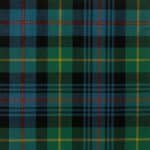 Farquharson
 Modern
 Muted
Muted Weathered