Home › Tartans › Drummond of Strathallan Modern
A clan and family tartan, available to order. Everything we make in Drummond of Strathallan Modern: kilts, kilted skirts, accessories and full Highland outfits, every piece cut to your own measurements.
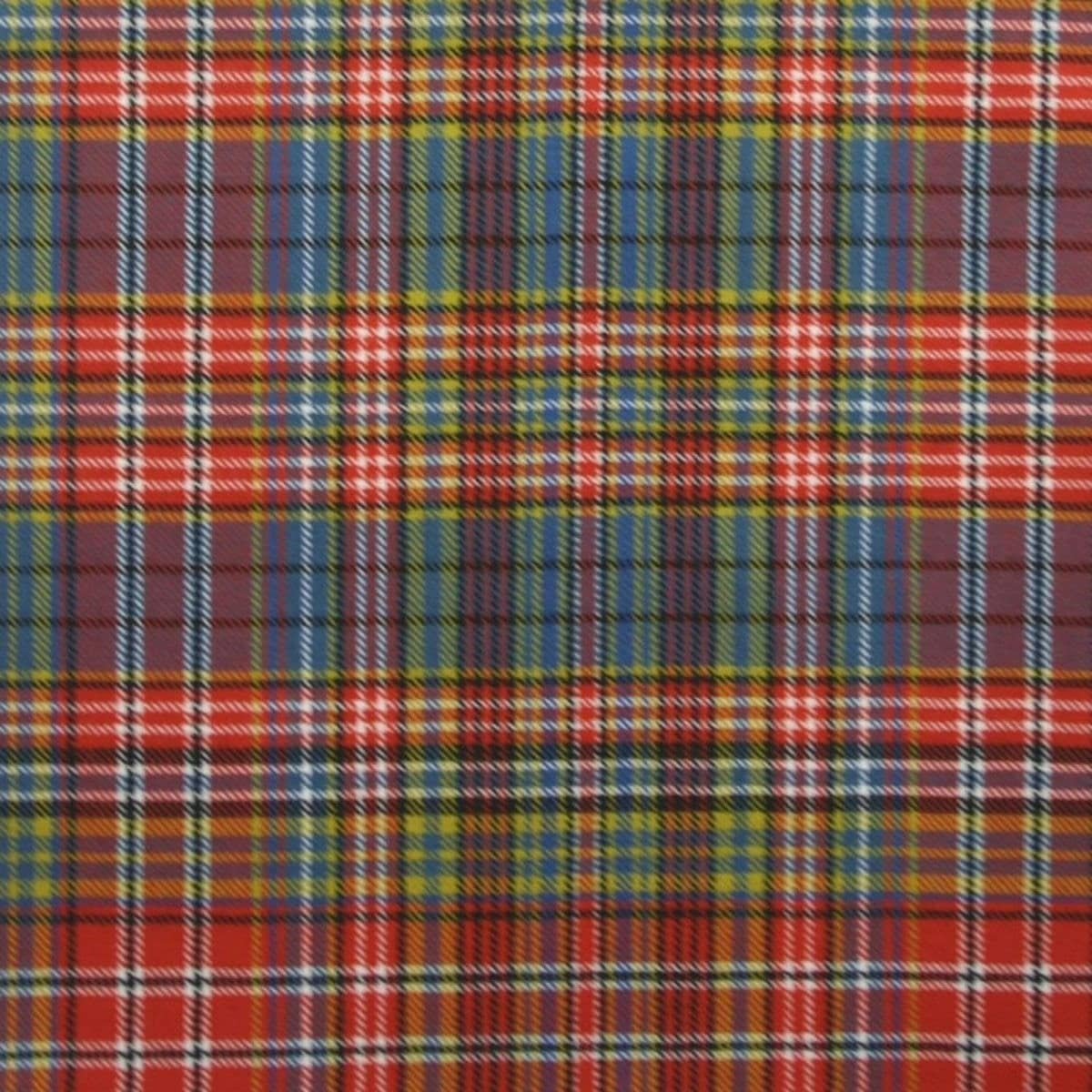 Modern
 Ancient
The Drummond of Strathallan Modern tartan, made to order by Handmade Kilt. Choose it for a kilt, a kilted skirt, an accessory or a full Highland outfit — everything below is cut to your own measurements.
Choose your product
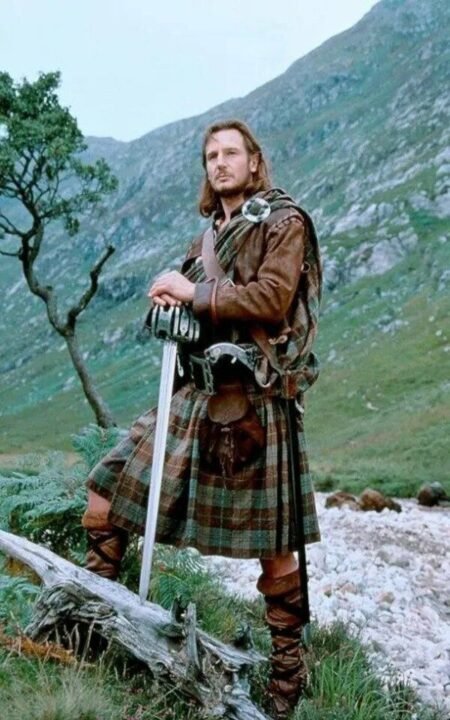
Everything below can be made in the Drummond of Strathallan Modern tartan. Choose a product, then pick your size and options on the next page — the tartan is already selected for you.

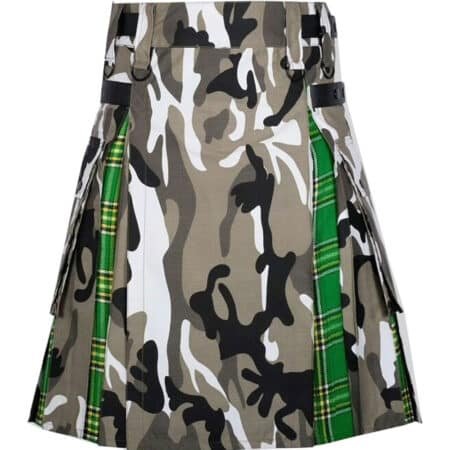

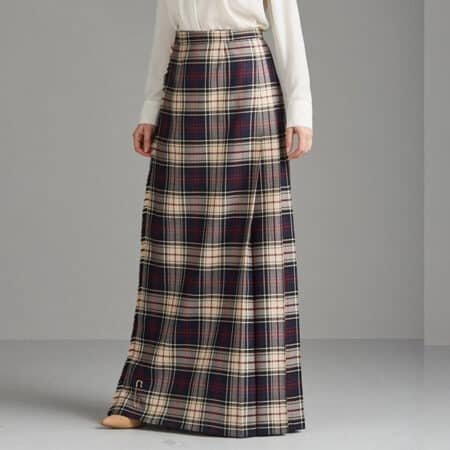
Available in Drummond of Strathallan Modern
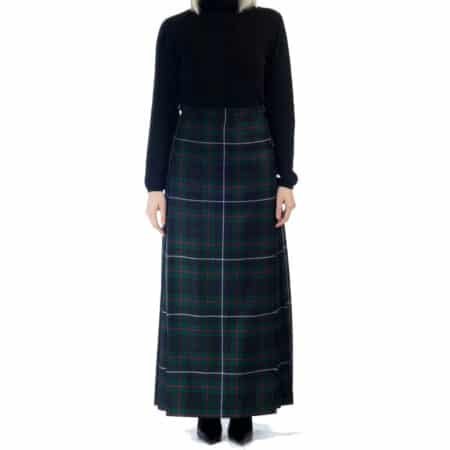

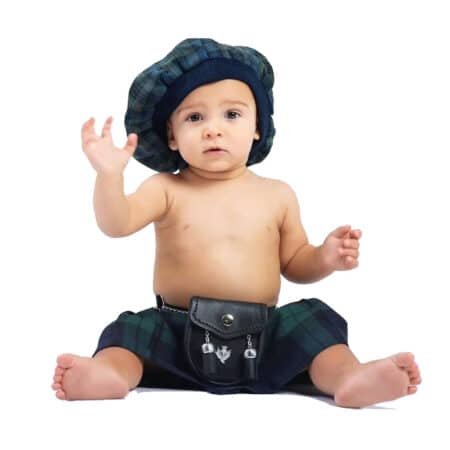
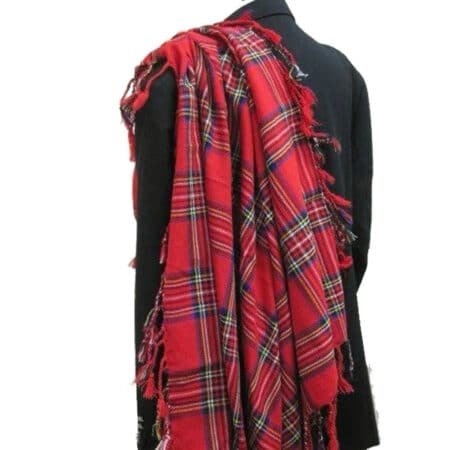


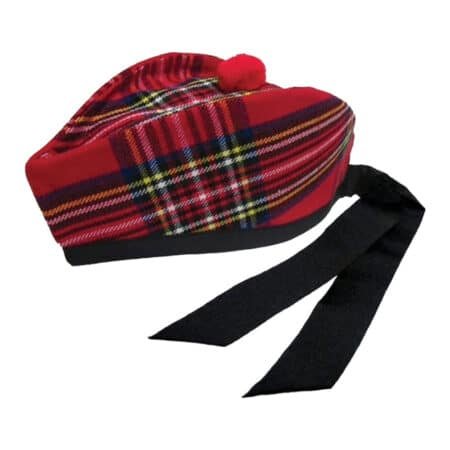
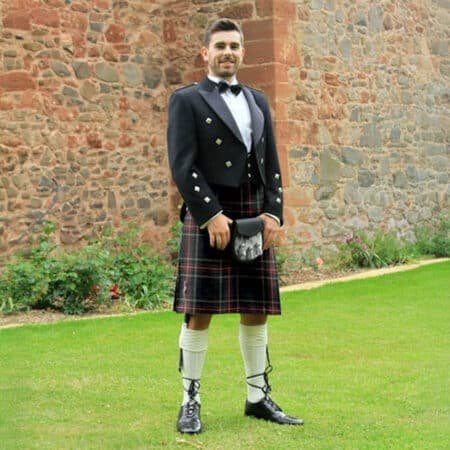
Available in Drummond of Strathallan Modern
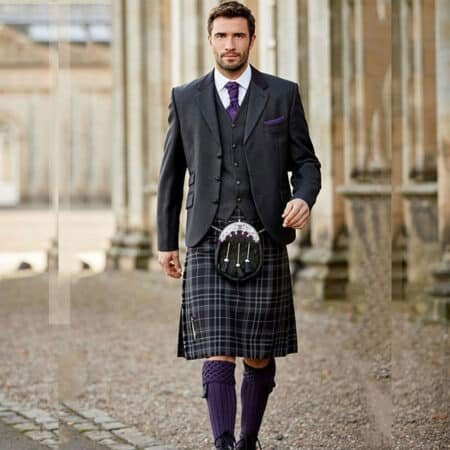
Available in Drummond of Strathallan Modern
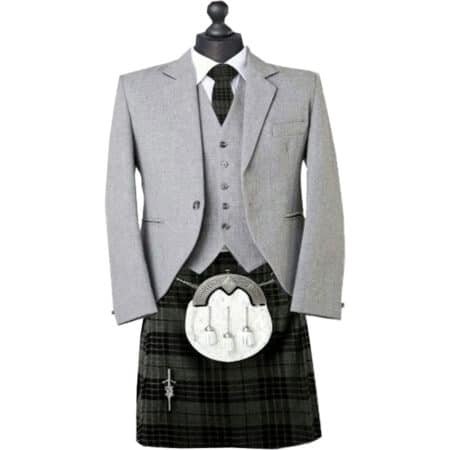
Available in Drummond of Strathallan Modern
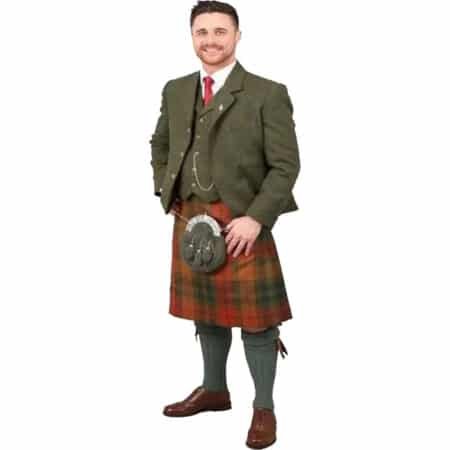
Available in Drummond of Strathallan Modern
The sett
Two queens of Scotland came out of this family, and so did two forfeitures that stripped it of everything twice over.
The origin of the name is argued two ways and the argument has never been closed. The older and more colourful version makes the founder a Hungarian called Maurice, who is said to have come north in the company of Edgar Ætheling after the Norman conquest, to have been received by Malcolm III, and to have married a Margaret de Drymen. The flatter explanation is that the surname is territorial: the parish of Drymen lies west of Stirling, and its name appears to come from the Gaelic dromainn, a ridge or high ground. A place-name derivation is what the evidence supports; the Hungarian prince is family tradition, and should be read as such.
The first chief who appears in written record is Sir Malcolm Beg de Drummond, who died in 1259, held the offices of Chamberlain and Thane of Lennox, and married a daughter of the Earl of Lennox. In 1296 Gilbert de Drumund of Dumbarton swore fealty to Edward I and his name went on to the Ragman Rolls, which is the sort of humiliating document that makes very good evidence. A later Sir Malcolm de Drummond is credited with laying caltrops — four-spiked iron devices that always land point upward — in front of the English cavalry at Bannockburn in 1314, and with being rewarded by Robert I with Perthshire lands. The Perthshire lands are solid. The caltrops belong to clan tradition and there is no contemporary record of them.
The family rose by marriage rather than by conquest. Margaret Drummond married David II. More consequentially, Anabella Drummond, daughter of Sir John Drummond of Stobhall, married John Stewart, Earl of Carrick, who became Robert III; their son, born in 1394, became James I. That is a direct line from a Perthshire laird’s daughter to the crown within a generation, and it explains why a family of no great territorial weight was thereafter always near the centre of Scottish politics.
James Drummond was created Earl of Perth in 1605. When James VII came to the throne in 1685 the fourth Earl had converted to Catholicism, and from that point the family and the Jacobite cause were inseparable. The second Duke of Perth came out in 1715, fought at Sheriffmuir, and fled to France with his estates forfeited. His successor was born in France, returned to Scotland in 1734, commanded for Charles Edward Stuart in the 1745 rising, was shot at Culloden in 1746 and died of his wounds on a boat making for France; he was buried at sea. The properties were forfeited a second time, in 1750. The earldom of Perth was not restored until an Act of Parliament in 1853. The present chief, James David Drummond, is tenth Earl of Perth in the restored line and holds the Jacobite dignities as well.
The family held Stobhall, seven miles north of Perth, from 1360. Its chapel keeps a painted ceiling of about 1630 to 1640. They moved their main residence in the fifteenth century to Drummond Castle near Crieff, whose tower house was begun around 1490 by John Drummond, first Lord Drummond of Cargill. The second Earl of Perth laid out the terraced gardens there in the 1630s; Cromwell’s army sacked the castle in 1653; the estate was forfeited after the 1745 rising and the gardens were remade from the 1830s by Lewis Kennedy, with Queen Victoria visiting in 1842. Drummond Castle passed out of the family and is now held with Grimsthorpe under a trust, while Stobhall was bought back by the eighth Earl and is again the chiefly seat — a rare case of a Scottish family recovering its oldest house rather than its grandest one.
There was no settled system of named clan tartans before the nineteenth century. The Highland Society of London began collecting certified specimens from chiefs in 1815, and had something like fifty-five by 1822, the year Walter Scott staged the visit of George IV to Edinburgh and Wilsons of Bannockburn supplied most of the cloth that was worn. The Vestiarium Scoticum of 1842, offered as a copy of a sixteenth-century manuscript that was never produced for inspection, added a further crop. Any Drummond sett belongs inside that window or later, and claims of medieval ancestry for a particular arrangement of stripes should be treated with suspicion whatever the name attached to it. The Modern, Ancient and Weathered versions are the same pattern in different dye conventions, not different tartans.
Anyone of the name, in any of its spellings, and those of the families long associated with the Drummond interest in Perthshire. There is a chief in place, which means there is somebody with the standing to say otherwise, and nothing in the record suggests he has.
Sources: Clan Drummond, Wikipedia; Drummond Castle, Wikipedia; Scottish Tartans Authority, The History of Tartan; Tartan, Wikipedia.
Near neighbours
This sett has no listing of its own yet. These are the Drummond of tartans we list separately, all available to order in the same way.
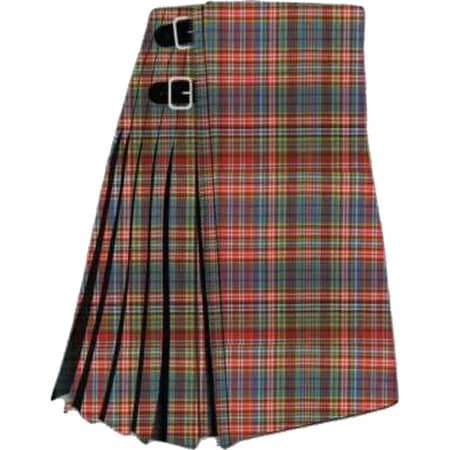
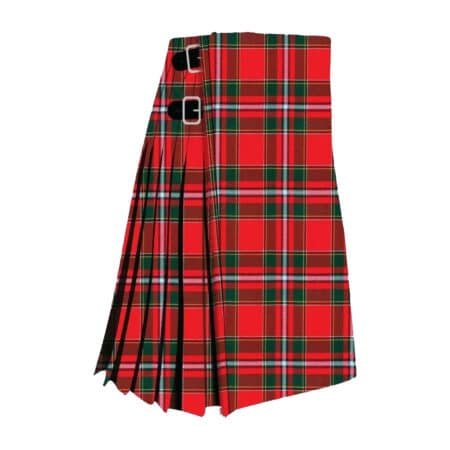
Near neighbours
The same pattern in different depths of colour. Any of them can be made up in any style above.
All 2,107 tartans are available to order, and any of them can be cut into any style on this page.