Home › Tartans › Davidson of Tulloch Ancient
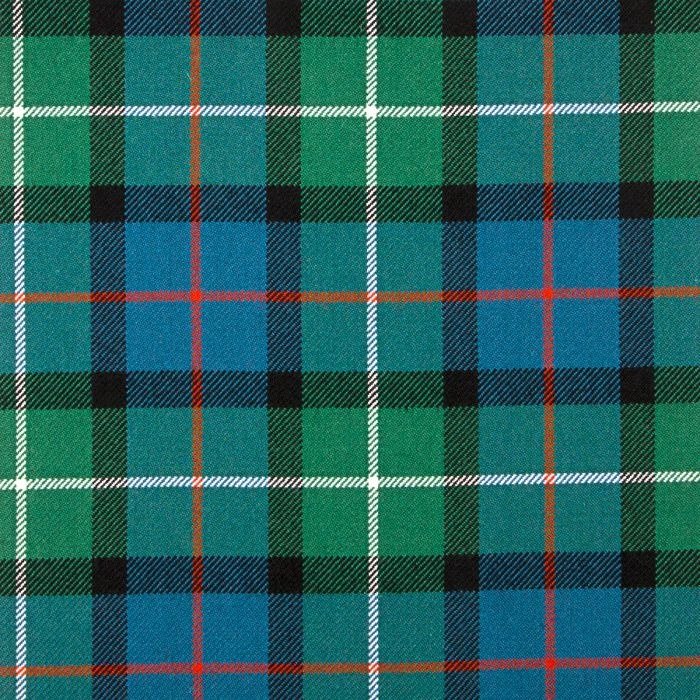
A clan and family tartan, available to order. Everything we make in Davidson of Tulloch Ancient: kilts, kilted skirts, accessories and full Highland outfits, every piece cut to your own measurements.
 Ancient
 Modern
The Davidson of Tulloch Ancient tartan, made to order by Handmade Kilt. Choose it for a kilt, a kilted skirt, an accessory or a full Highland outfit — everything below is cut to your own measurements.
Choose your product
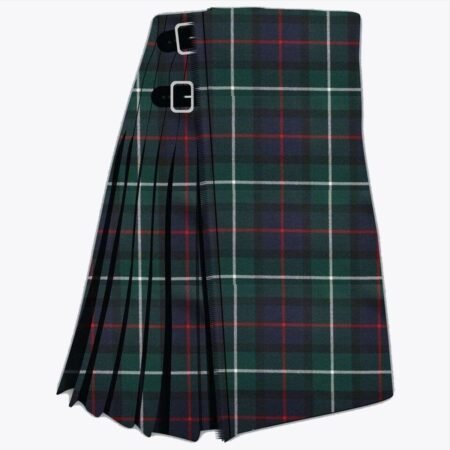
Everything below can be made in the Davidson of Tulloch Ancient tartan. Choose a product, then pick your size and options on the next page — the tartan is already selected for you.
Available in Davidson of Tulloch Ancient

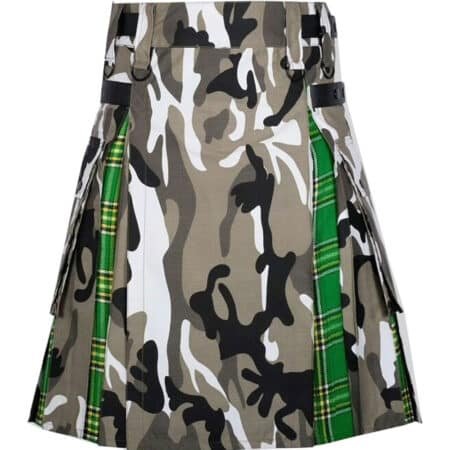

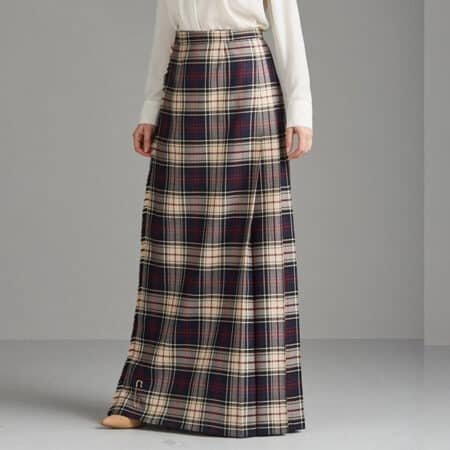
Available in Davidson of Tulloch Ancient
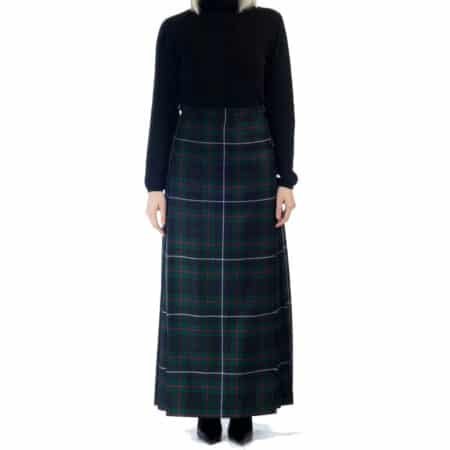

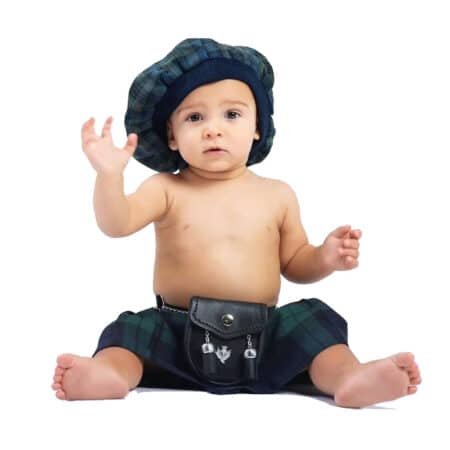
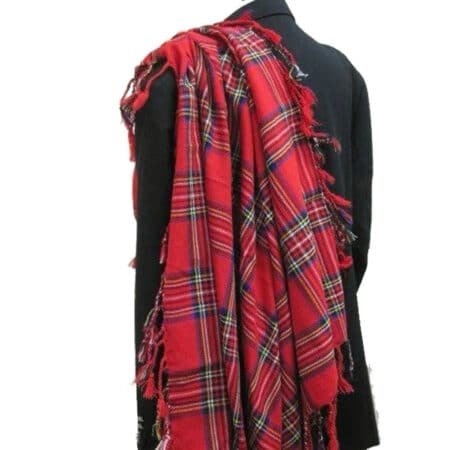


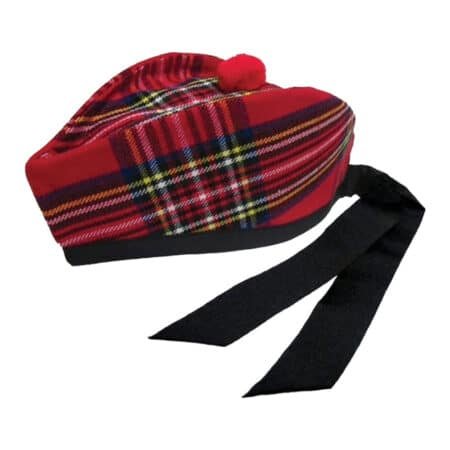
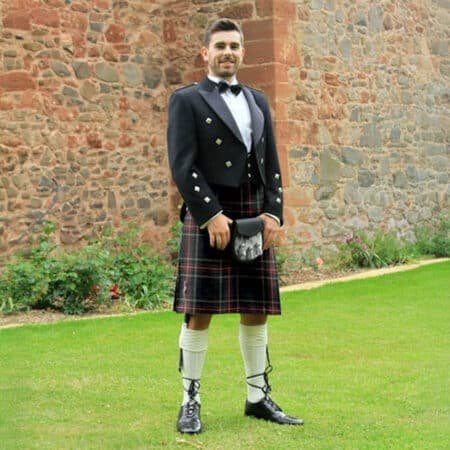
Available in Davidson of Tulloch Ancient
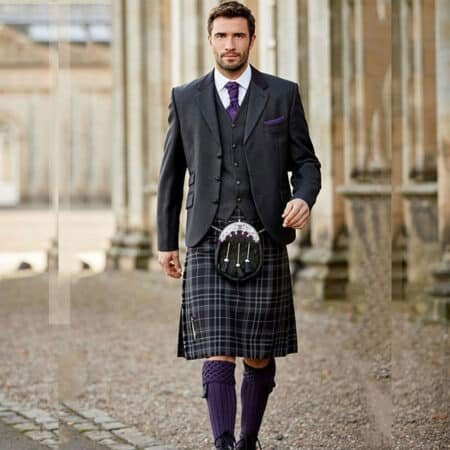
Available in Davidson of Tulloch Ancient
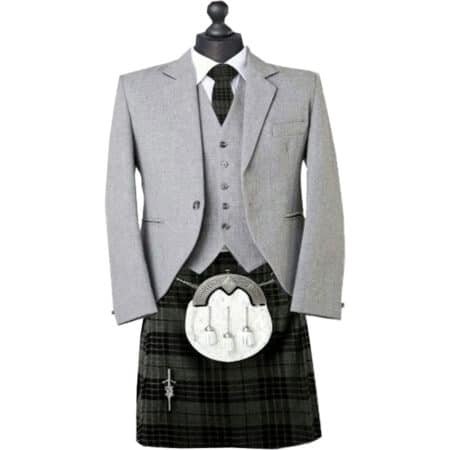
Available in Davidson of Tulloch Ancient
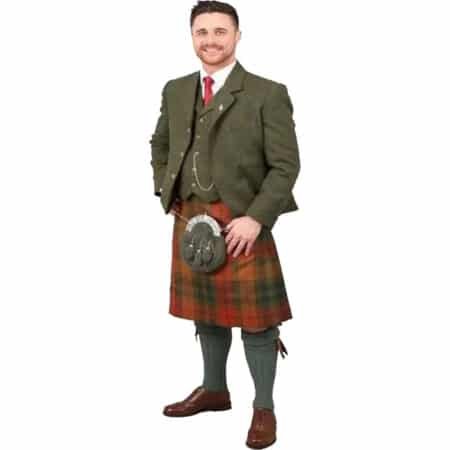
Available in Davidson of Tulloch Ancient
The sett
This is a Highland name whose two defining battles are both disputed, and whose most famous quarrel was not with an enemy but with an ally over which of them should hold the right wing.
The Gaelic style of the family is Clann Dhai. The account preserved in the Kinrara manuscript takes the Davidsons back to David Dubh of Clan Comyn, which would make them a surviving limb of a name proscribed in 1320 after the Comyns lost their long struggle with Robert I. Against that stands the reading of the nineteenth-century historian William Skene, who made the Davidsons and the Macphersons joint founders of the older Clan Chattan, descending from the sons of Gilliecattan Mor. Both cannot be true, and nothing in the surviving record decides between them.
What is documented is a marriage. The first chief the record names is David, who married Slane Mackintosh, a daughter of the sixth chief of Mackintosh, and it was that connection which placed the family inside Clan Chattan.
Clan Chattan was not a clan but a confederation, at its widest seventeen separate clans and now twelve, each with a chief of its own and all acknowledging the Mackintosh chief as head. The union is conventionally dated to 1291, when Eva, heiress of the older line, married Angus Mackintosh. It was put on a formal footing much later by the Bond of Union of 1609, which created a council of twelve arbitrators so that quarrels between member clans were settled internally rather than in the royal courts. Membership bought protection and guaranteed arguments about rank.
The clearest of those arguments was fought out at Invernahavon in 1370, where the Chattan clans — Mackintosh, Macpherson and Davidson — met Clan Cameron. Before the fighting, the Davidsons and the Macphersons disputed which of them should command the right wing. The Mackintosh chief found for the Davidsons, and the Macphersons withdrew. The Camerons broke the Davidsons before the Macphersons returned to the field and turned the day. Davidson tradition holds that the name was destroyed as a fighting force that afternoon. That is a memorable claim rather than a demonstrable one, and should be read as tradition.
Thirty men a side fought on the North Inch at Perth in front of Robert III. The earliest evidence is administrative and entirely independent of the storytellers: the Chamberlain Rolls of 1396 and 1397 record payment for building the enclosure. The first narrative account is in Andrew of Wyntoun’s Orygynale Cronykil of about 1420, followed by Walter Bower’s Scotichronicon and, in the sixteenth century, by John Major, Hector Boece and George Buchanan. Walter Scott turned it into The Fair Maid of Perth in 1828, while admitting that antiquarians could not agree on who had fought.
They still cannot. Every source has Clan Chattan on one side. The other side has been identified as Clan Cameron, as the Macphersons against the Davidsons — a fight inside the confederation — and as a Clan Kay or Clan Quhele that Skene thought was really a division of Mackintosh. Nineteen of the thirty Chattan men were killed, and twenty-nine on the other side. A family whose two great set-piece battles are both contested has an early history that is largely inference.
After 1396 the chief is said to have gone north, and it is from that point that Davidson of Cantray and Davidson of Tulloch appear. A fifteenth-century tradition settles the chief and his following at Davidston in the parish of Cromarty; the estate was sold in the eighteenth century and Tulloch in Ross-shire bought in its place. Alexander Davidson, town clerk of Fortrose and known as Clerk Davidson, married Elizabeth Bremmer in November 1689, and the Tulloch Castle lairds who descended from him carried the chiefship. Tulloch itself was extensively restored by Robert Lorimer in 1922. Duncan VI of Tulloch died in 1917 and the chiefship then stood vacant and disputed for eighty years before passing in 1997 to the Davidsons of Davidston in New Zealand; Grant Guthrie Davidson, third of Davidston, has held it since 2015. The motto is Sapienter si sincere and the crest a stag’s head erased with an arrow through the neck.
No early record of a distinct Davidson pattern surfaced in the sources consulted, and that is unsurprising: named clan setts became a system only after the Highland Society of London wrote to chiefs in 1815 asking for certified specimens, about fifty-five of which had been gathered by 1822, and after the Vestiarium Scoticum of 1842 multiplied them. Modern, Ancient and Weathered are dye conventions applied to the same arrangement of stripes rather than separate designs, so a Davidson kilt can look very different in tone without being a different tartan at all. Anyone of the name may wear it, as may those of the Chattan families with which the Davidsons stood; there is a chief again after a long vacancy, so there is an authority to consult, and nothing found here restricts the wearing.
Sources: Clan Davidson, Wikipedia; Clan Chattan, Wikipedia; Battle of the North Inch, Wikipedia; Clan Mackintosh, Wikipedia; Scottish Tartans Authority, The History of Tartan.
Near neighbours
The same pattern in different depths of colour. Any of them can be made up in any style above.
All 2,107 tartans are available to order, and any of them can be cut into any style on this page.