
Home › Tartans › Crawford Muted
A clan and family tartan, available to order. Everything we make in Crawford Muted: kilts, kilted skirts, accessories and full Highland outfits, every piece cut to your own measurements.
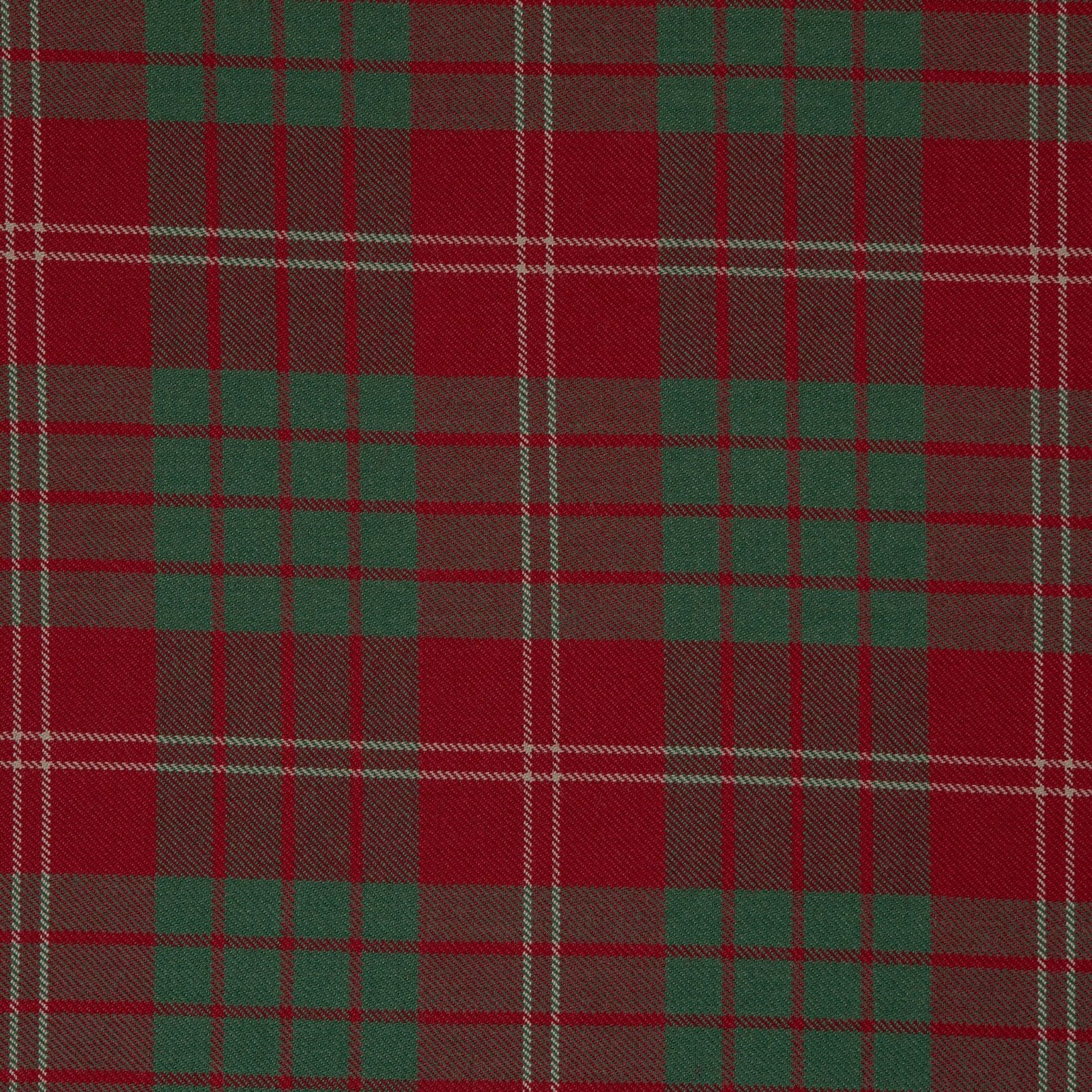
The Crawford Muted tartan, made to order by Handmade Kilt. Choose it for a kilt, a kilted skirt, an accessory or a full Highland outfit — everything below is cut to your own measurements.
Choose your product
Everything below can be made in the Crawford Muted tartan. Choose a product, then pick your size and options on the next page — the tartan is already selected for you.

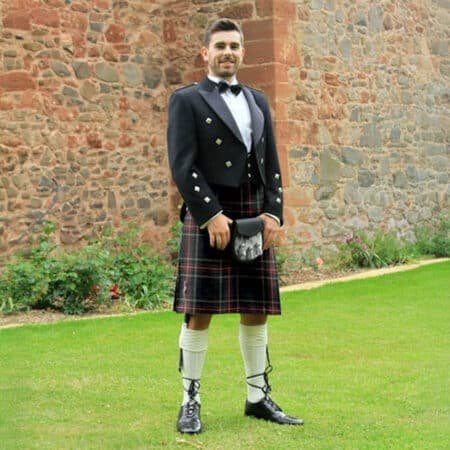
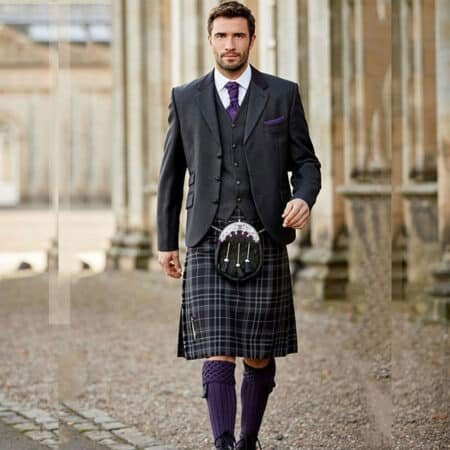
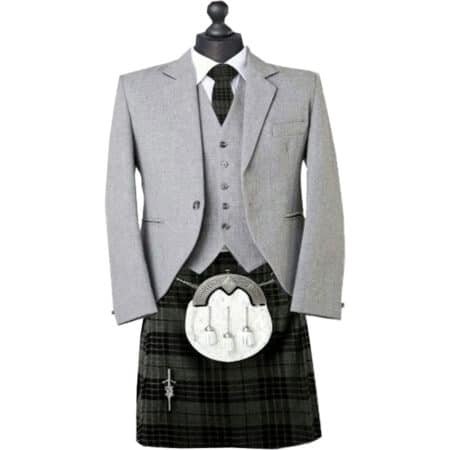
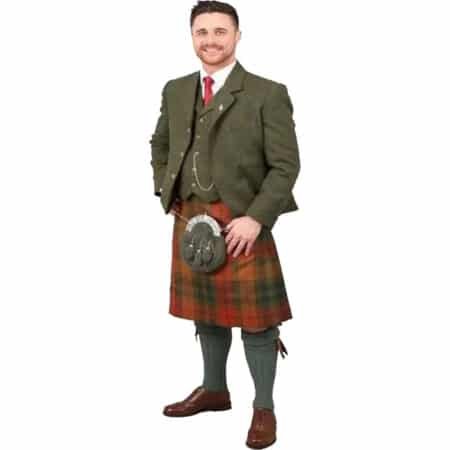
Available in Crawford Muted
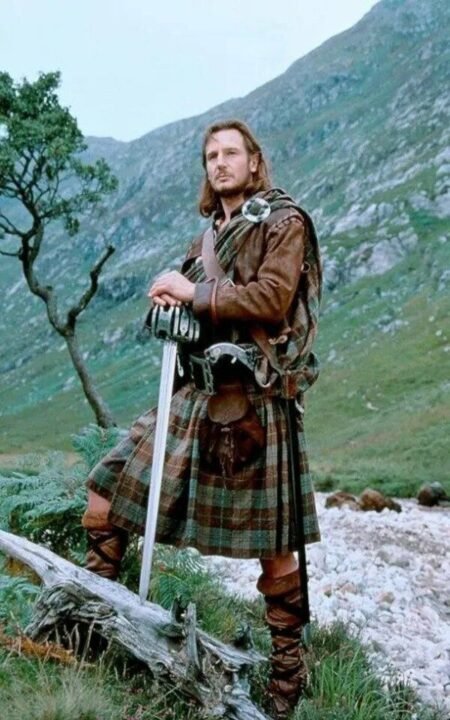

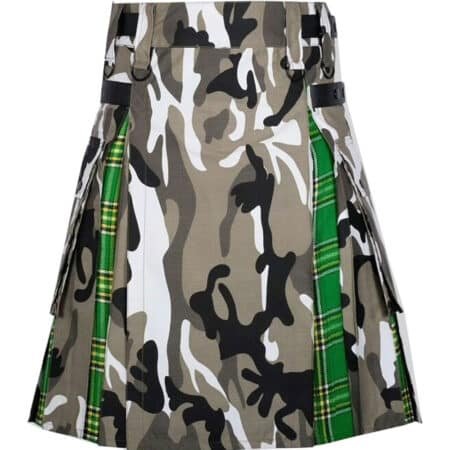

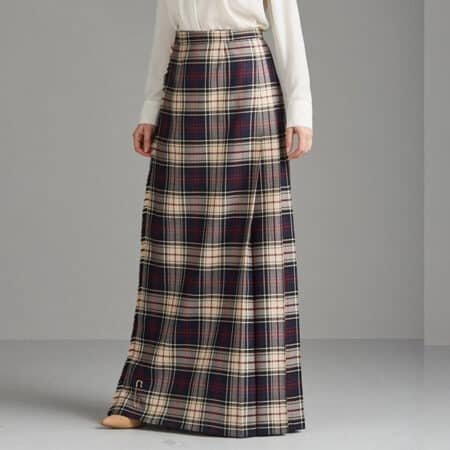
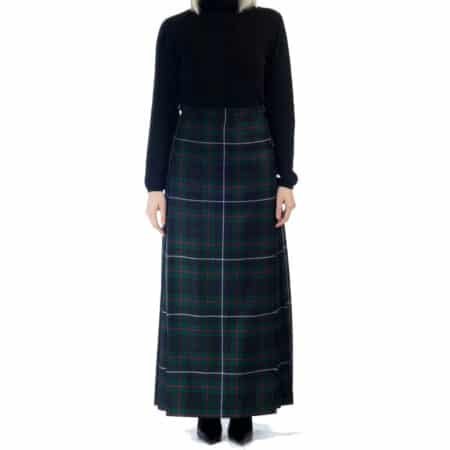

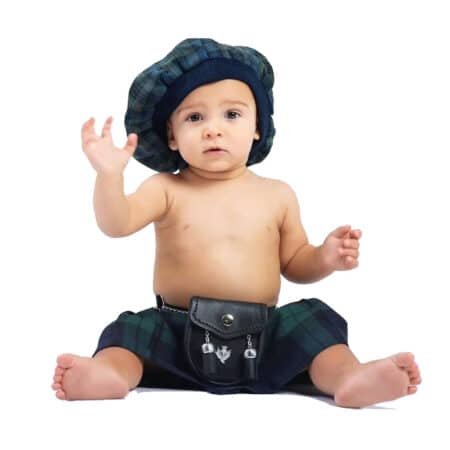
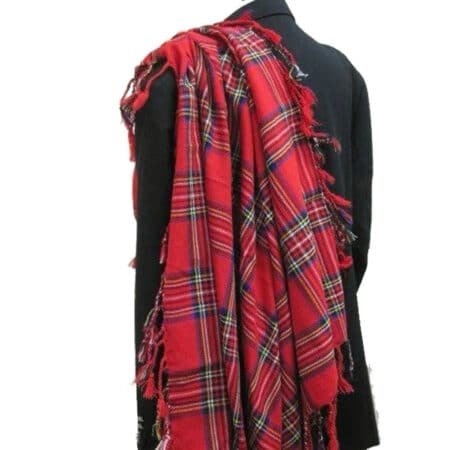


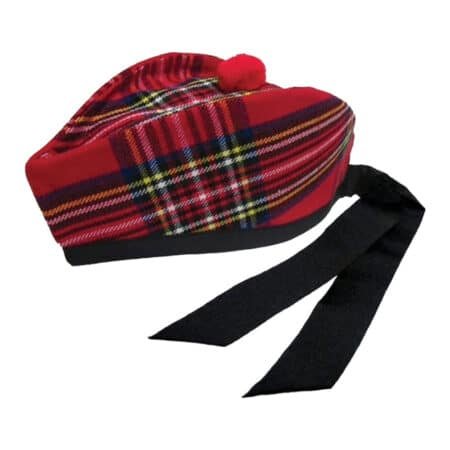
Available in Crawford Muted
The sett
The Crawford chiefship has stood empty since the last of the line sold up and sailed for Canada in 1904, and the sett worn under the name first appears in a book that was denounced as a forgery within months of publication.
Crawford is a place-name surname, taken from the barony of Crawfordjohn in upper Lanarkshire and in use as a family name by about 1160. Where the family itself came from is genuinely disputed. The tradition that takes the first Reginald Crawford to be a son of the Earl of Richmond, a Norman knight planted in Scotland by David I, was widely believed in the eighteenth century and is now treated with suspicion. Against it stands the argument for Anglo-Saxon or Scandinavian descent; for it stands the awkward fact that the early forenames in all the principal Crawford houses are Norman ones. Some writers have preferred an Anglo-Danish origin. The record does not settle the question, and anyone who tells you it does has chosen a side.
The family enters national history through Ayrshire office rather than Lanarkshire land. Sir Reginald Crawford was sheriff of Ayr from 1296. His sister married Wallace of Elderslie and was the mother of William Wallace, which made the Crawfords close kin to the man who led the rising of 1297, and they came out with him. It is the one connection every Crawford account reaches for, and for once it is a documented relationship rather than a tradition.
The chiefly line is reckoned to be that of Auchinames in Renfrewshire, which received a grant of its lands from Robert I in 1320. Craufurdland in Ayrshire became the other great branch, its castle much enlarged by the sixteenth laird in the seventeenth century, and the two spellings have gone their separate ways ever since. The senior line came to an end as a Scottish landed family in 1904, when Hugh Ronald George Craufurd sold Auchinames, Crosbie and the remaining estates and emigrated. He died at Calgary in 1942, leaving three male heirs, but nobody has since established a claim before the Court of the Lord Lyon, and Crawford is therefore an armigerous name: one that had a chief bearing undifferenced arms and has none recognised now. It is worth noting that the Lord Lyon has objected to the phrase itself, on the ground that arms belong to a person or a society and never to a clan.
There was no Crawford tartan in the 1730s, and no serious authority claims otherwise. The pattern first appears, spelled Crawfovrd, in the Vestiarium Scoticum of 1842, published in Edinburgh by William Tait in an edition of only a few dozen copies, with the introduction and notes supplied by John Sobieski Stuart. The brothers who produced it claimed descent from Prince Charles Edward and possession of a fifteenth-century manuscript of clan patterns; both claims collapsed. The book was called a forgery almost at once, and in 1895 chemical analysis by Stevenson Macadam found that the manuscript said to date from 1721 had been treated to make it look older than it was.
None of which has dislodged the pattern. The Vestiarium version is still the standard Crawford, and it also appears in the Clans Originaux of 1880. The original text is unusually particular about the greens, distinguishing the shade beside the crimson line, likened to a young ash tree, from the grass-green used elsewhere; the red as first given is a bright one rather than the deeper crimson often woven now. That distinction is the best guide to what a Crawford setting is trying to do, and it explains why Ancient and Weathered versions of the same threading read so differently.
Two later patterns carry the name without belonging to it. A Crawford Arisaid was made about 1985 for the dancing daughter of a Mrs Joan Crawford Carlson, and a tartan for the Baronage of Crawfordjohn was recorded in December 2005. Neither is a family sett.
With no chief there is no one to ask and no one to refuse. Crawford, Craufurd, Crauford and Crawfurd all draw on the same pattern, and the absence of a chief is a matter of record rather than a defect to be papered over.
Sources: Clan Crawford, Wikipedia; Vestiarium Scoticum, Wikipedia; armigerous clan and the Court of the Lord Lyon, Wikipedia; Scottish Tartans Authority, tartan ferret records for Crawford, Crawford Arisaid and Baron of Crawfordjohn.
Near neighbours
The same pattern in different depths of colour. Any of them can be made up in any style above.
All 2,107 tartans are available to order, and any of them can be cut into any style on this page.
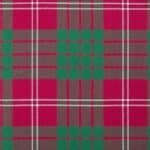 Ancient
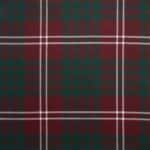 Modern
 Weathered