Home › Tartans › Brodie Hunting Ancient
A clan and family tartan, available to order. Everything we make in Brodie Hunting Ancient: kilts, kilted skirts, accessories and full Highland outfits, every piece cut to your own measurements.
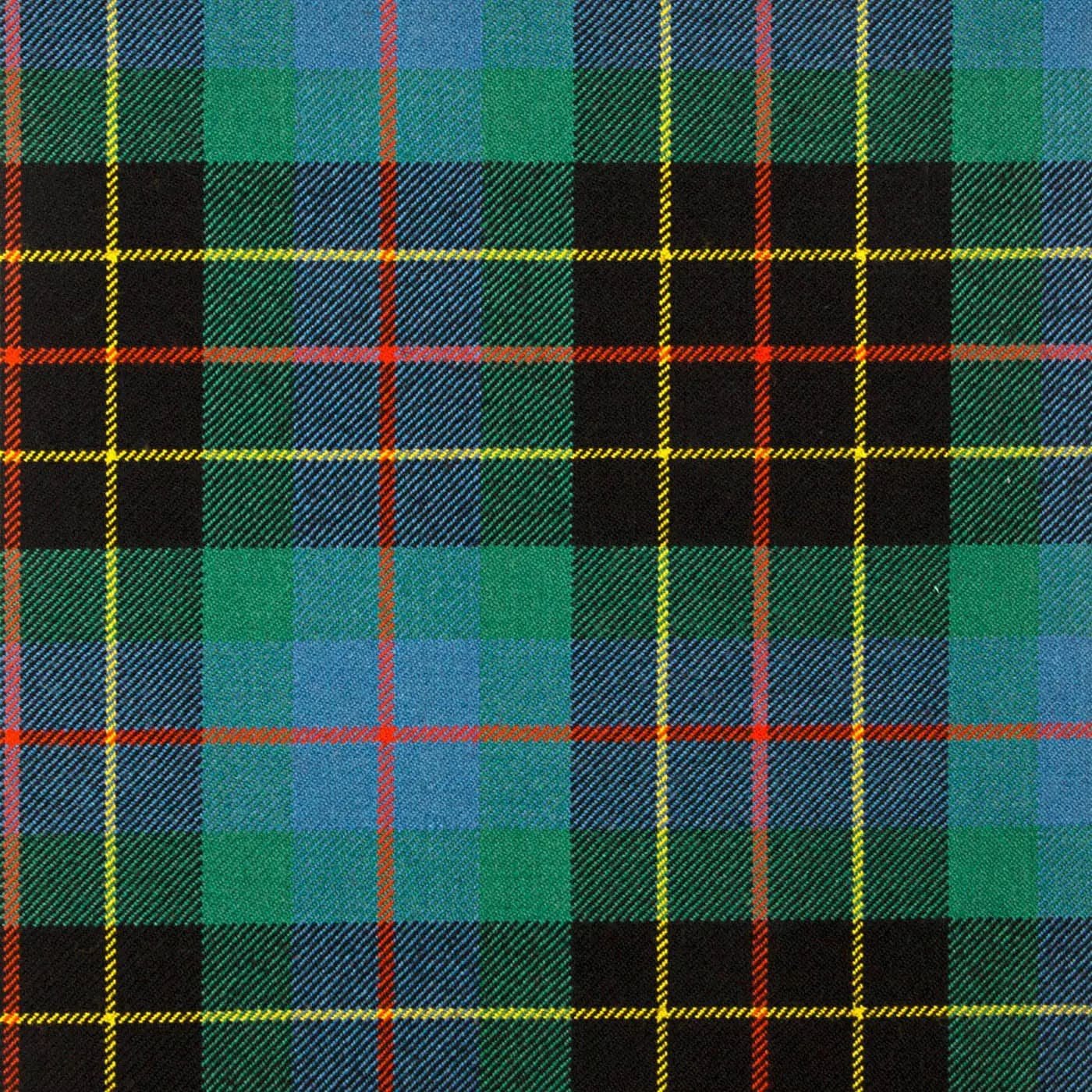
The Brodie Hunting Ancient tartan, made to order by Handmade Kilt. Choose it for a kilt, a kilted skirt, an accessory or a full Highland outfit — everything below is cut to your own measurements.
Choose your product
Everything below can be made in the Brodie Hunting Ancient tartan. Choose a product, then pick your size and options on the next page — the tartan is already selected for you.
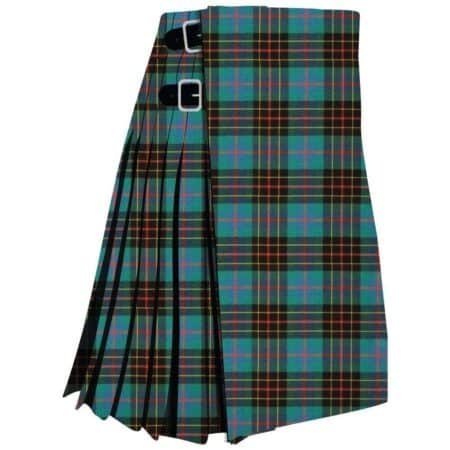
Available in Brodie Hunting Ancient



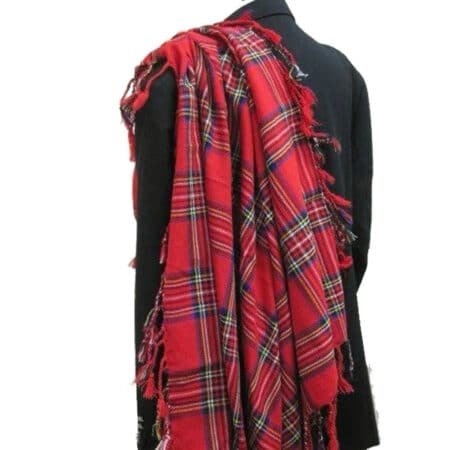


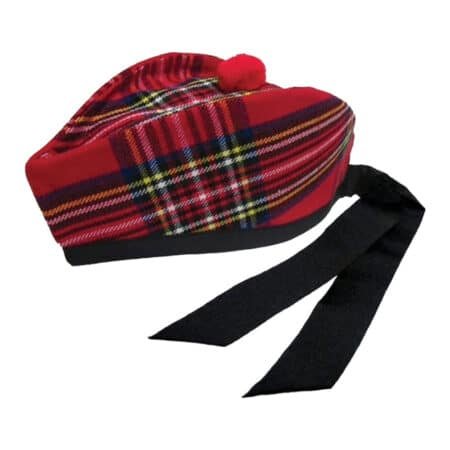
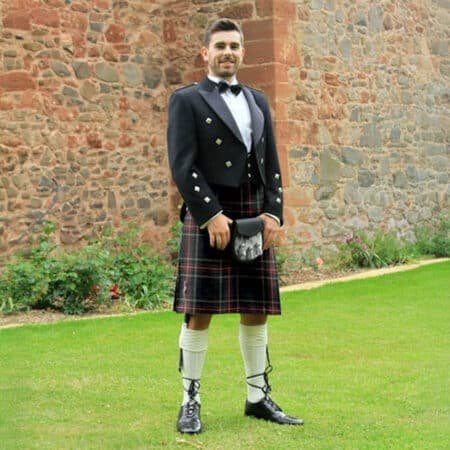
Available in Brodie Hunting Ancient
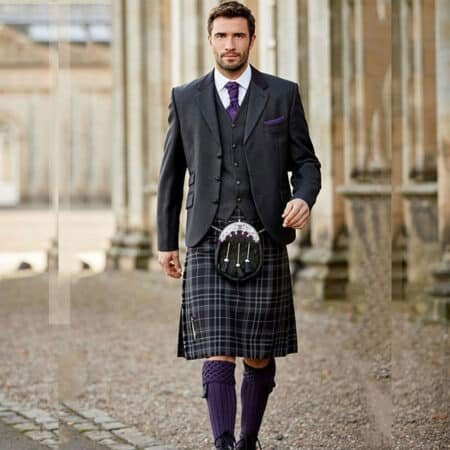
Available in Brodie Hunting Ancient
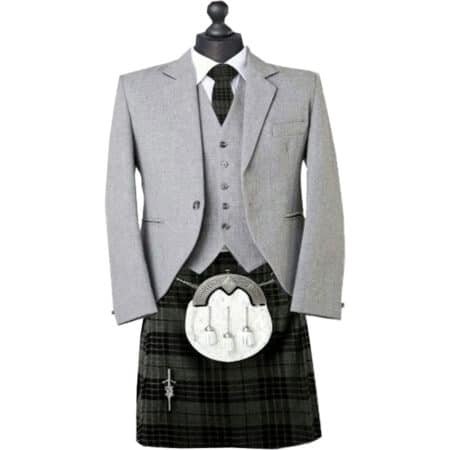
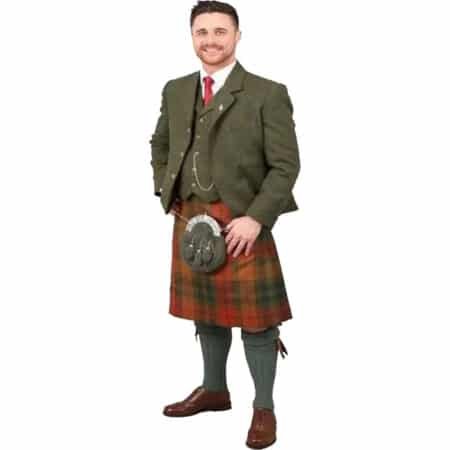
Available in Brodie Hunting Ancient
The sett
The Brodie archive was burned in 1645, which is why a family that can produce a charter from Robert I has almost nothing between that charter and the seventeenth century.
Nobody has settled what Brodie means. The favoured readings are topographical: a Gaelic word for a little ridge, a brow or a precipice, or the Old Irish broth, a ditch or mire, which would suit the low wet ground east of Forres well enough. A Norman line of argument points at a thirteenth-century knight recorded in France as Guy de Brothie. Dr Ian Grimble went the other way entirely and derived the name from the Pictish royal style borne by King Bridei, which appears in the sources as Brude and Bruide. The early spellings — Brochy, Brothy, Brothie, Brothu, Brode — are consistent with a local place-name and do not decide between the theories.
The Brodie chiefs were thanes of Brodie and Dyke in Moray. A reference to MacBeth, thane of Dyke, in 1262 is often quoted, but the link to the later family is not demonstrated. The first man who can be named with confidence is Michael, son of Malcolm, thane of Brothie and Dyke, who in 1311 received a charter from Robert I confirming his Brodie lands. The wording matters: he held the thanage by right of succession from his paternal ancestors, which means the family was already established there and the charter confirms rather than creates. Clan tradition pushes the connection back to about 1160 and a grant from Malcolm IV, but that is tradition and there is no surviving document for it.
After 1311 the record thins sharply, and the reason is specific. In 1645 Lewis Gordon, third Marquess of Huntly, plundered and burned Brodie Castle, destroying the family papers. What survives of the intervening chiefs is therefore mostly incidental: Johne of Brode assisting the Mackenzies at Blar-na-Pairc in 1466; Thomame Brodye killed on 10 September 1547 at Pinkie Cleugh, the defeat Scots called Black Saturday; Alexander Brodie, remembered as the rebel, attacking the Cummings in 1550 and joining the Gordon rising that ended at Corrichie in 1562. Even the castle itself is disputed. The published accounts variously date the Z-plan tower house to the mid sixteenth century, give 1567 as its completion, and report an earlier tower of 1430 within it; the remodelling of 1824 to 1845 by William Burn and James Wylson makes the earlier phases harder to read.
Three Brodies account for most of what the family is known for outside Moray. Alexander Brodie, fifteenth chief and remembered as the good Lord Brodie, lived from 1617 to 1680, was a committed covenanter, had a hand in stripping the artwork from Elgin Cathedral, sat in judgement at witchcraft trials, and twice crossed to The Hague in the effort to bring Charles II back. His descendant Alexander Brodie, nineteenth chief, was Lord Lyon King of Arms through the rising of 1745, which put the custodian of Scottish heraldic record inside the family at exactly the moment heraldry became politically dangerous. The third is no credit to anyone: William Brodie of the Milton line, an Edinburgh cabinetmaker and deacon of his trade who robbed the houses he had fitted with locks, was hanged in 1788.
Brodie has an unbroken chiefship. Ninian Alexander Brodie, twenty-fifth chief and formerly a stage actor, handed Brodie Castle to the National Trust for Scotland in 1978 and died in 2003; Alexander Tristan Duff Brodie is the present chief and sits on the Standing Council of Scottish Chiefs. A chief in place does not make the tartan restricted. The sett belongs to the name, and anyone called Brodie, or descended from a Brodie line, may wear it without applying to anybody. Where the same threading is offered as Ancient, Weathered or Muted, the difference is in the dye strengths rather than in the pattern, so those variants are the same sett under different colour treatment.
The documented history of the Brodie sett is much shorter than the documented history of the Brodies. Named family patterns belong overwhelmingly to the period after about 1765, when the Bannockburn weavers of Wilson began standardising setts and selling them under family names, and the 1842 Vestiarium Scoticum of the Sobieski Stuart brothers — a book now generally regarded as a fabrication despite its influence — put a great many designs into circulation as ancient. None of the sources consulted here records when the Brodie sett entered that stream, and it would be easy but wrong to supply a date.
Sources: Clan Brodie, Wikipedia, citing Dr Ian Grimble; Brodie Castle, Wikipedia; Battle of Pinkie Cleugh, Wikipedia; Vestiarium Scoticum, Wikipedia; Peter Eslea MacDonald, tartan history papers, scottishtartans.co.uk.
Near neighbours
The same pattern in different depths of colour. Any of them can be made up in any style above.
All 2,107 tartans are available to order, and any of them can be cut into any style on this page.
 Modern
 Weathered