Every kilt made to your measurements · 2,100+ tartans · Expert sizing help

Home › Tartans › Fraser Ancient
A clan and family tartan, available to order. Everything we make in Fraser Ancient: kilts, kilted skirts, accessories and full Highland outfits, every piece cut to your own measurements.
The Fraser Ancient tartan, made to order by Handmade Kilt. Choose it for a kilt, a kilted skirt, an accessory or a full Highland outfit — everything below is cut to your own measurements.
Choose your product
Everything below can be made in the Fraser Ancient tartan. Choose a product, then pick your size and options on the next page — the tartan is already selected for you.

Available in Fraser Ancient
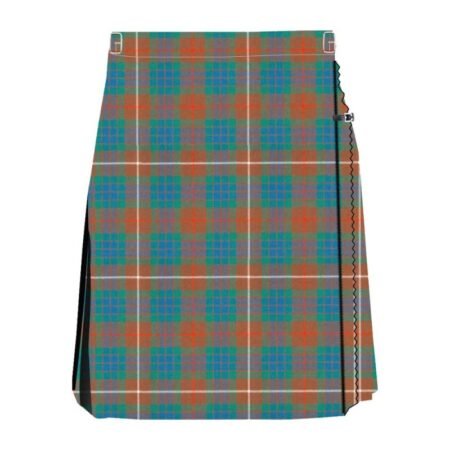
Available in Fraser Ancient
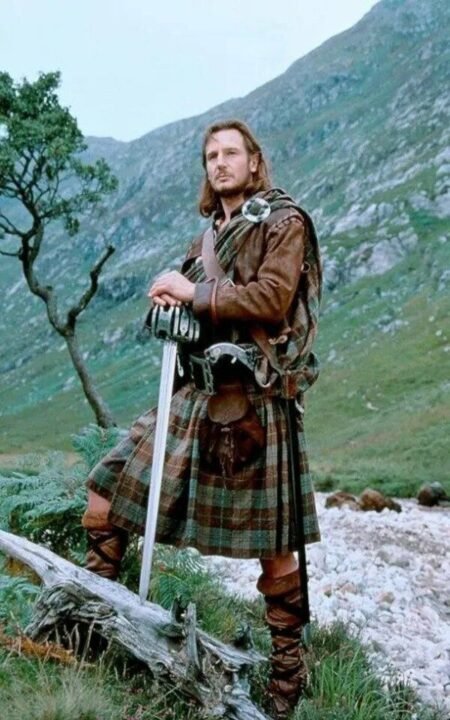

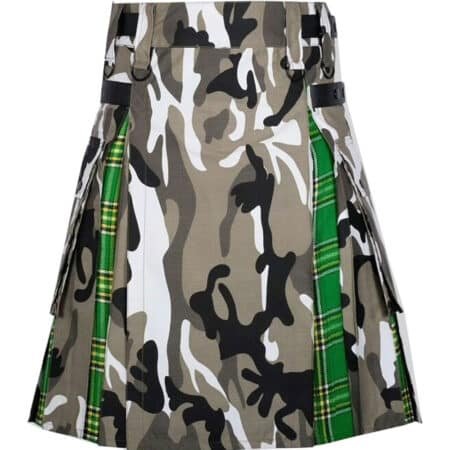

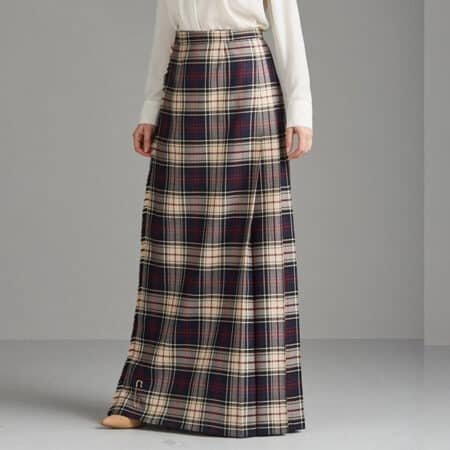
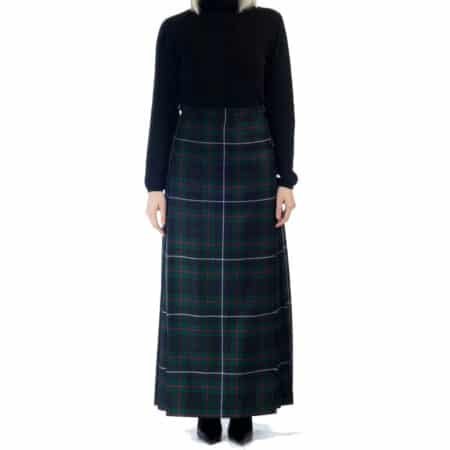

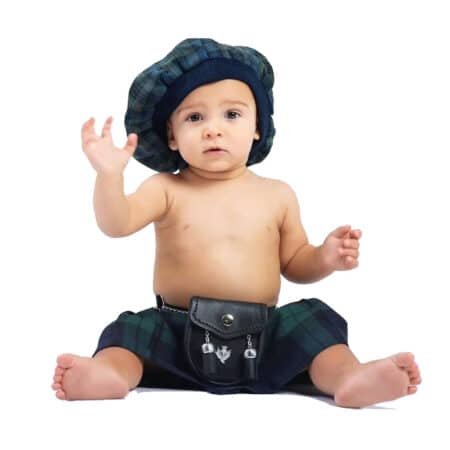
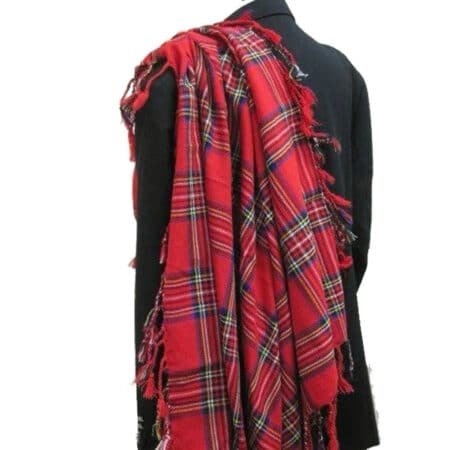


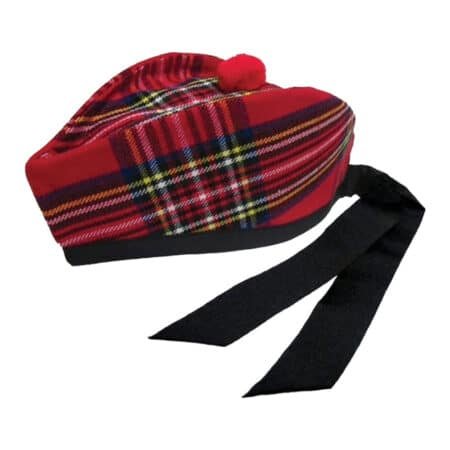
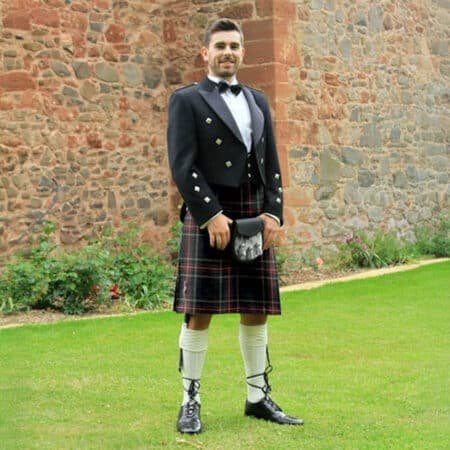
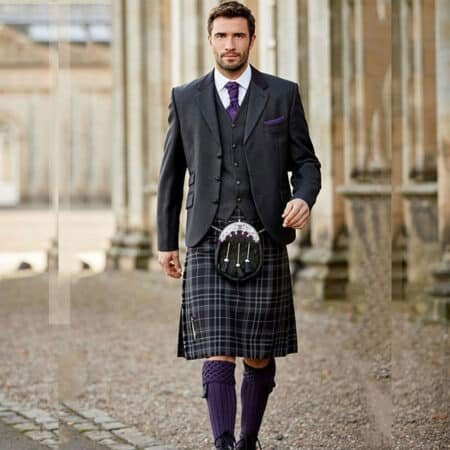
Available in Fraser Ancient
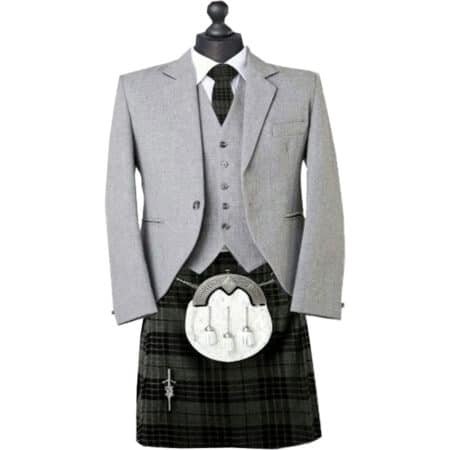
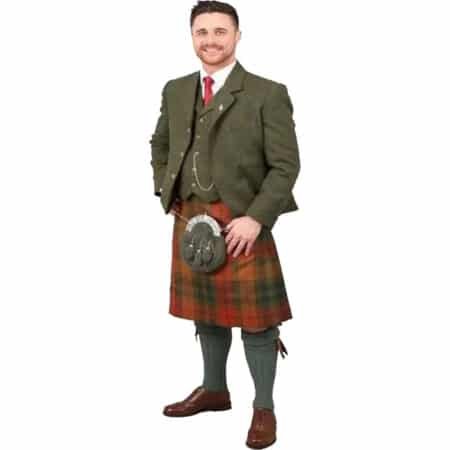

Available in Fraser Ancient

Available in Fraser Ancient



Available in Fraser Ancient
The sett
The Fraser arms carry strawberry flowers, which is either the key to the origin of the name or the oldest pun in Scottish heraldry, and specialists still cannot agree which.
The earliest secure appearances of the family in Scotland are in the middle of the twelfth century, and the name is written in forms such as de Fresel, de Friselle and de Freseliere. Simon Fraser held land at Keith in East Lothian and is on record between about 1160 and 1202; a Gilbert Fraser witnessed charters in the royal courts between 1164 and 1182; a Bernard Fraser held Drem in the 1180s. Those are the hard facts. What happens before them is argued over.
The conventional account is French, deriving the name from Fresel, an Old French word for a ribbon or braid, which would make the first Frasers dealers in such goods. Against that, the Oxford Dictionary of Family Names raises the possibility that the name is a Gaelic original mangled past recognition by Anglo-French clerks, which would put the French look of the early spellings down to the scribes rather than the family. The strawberry reading is the most repeated and the least likely to be primary: fraise is French for strawberry, and the fraises in the arms fit the name so neatly that they are more probably canting heraldry devised to suit a name already in use than evidence of where the name came from. None of these three explanations can be ruled out from the surviving documents. The honest position is that the record does not settle it.
By the fourteenth century the Frasers had risen high enough to be dangerous. A Simon Fraser was executed in 1306 for supporting Robert Bruce, and Sir Alexander Fraser of Touchfraser fought at Bannockburn in 1314 and married Bruce’s sister. From Alexander and his younger brother Simon the surname divided into two clans that remain formally distinct to this day.
The Highland line, Fraser of Lovat, descends from Simon and settled around Beauly in the Aird, west of Inverness. Its chiefs are styled Lord Lovat and are known in Gaelic as Mac Shimidh, son of Simon, from the recurrence of that forename in the family. The Lowland line, Fraser of Philorth, later Lord Saltoun, stayed in the north-east; Alexander Fraser acquired Cairnbulg in Aberdeenshire through marriage to a daughter of an Earl of Ross in 1375, and the family later founded Fraserburgh. Two chiefships, two sets of arms, two mottoes: Lovat uses Je suis prest, and the Philorth and Saltoun line uses a motto expressing that all its hope is in God. This is one of the clearer cases in Scotland of a single surname with two independent chiefly authorities, and it matters when working out which Fraser tartan fits a particular family.
The red Fraser pattern — a red ground with dark blue, green and white — was first published in the Vestiarium Scoticum in 1842. That book was presented as a reproduction of an old manuscript and is now accepted as a forgery by the two brothers who styled themselves Sobieski Stuart, so its authority as evidence of anything earlier is nil, even though a large share of the clan tartans in use today came out of it. The clan society itself does not pretend otherwise. Its own pages state that there is no clear reference to tartan being used in a clan sense before the rising of 1745, and treat the tartans as a legacy of the years after it rather than as ancient property.
The green and brown hunting Fraser is a derivative of the red sett rather than an independent design: the colours have been reassigned, with red taking the place occupied by white in the clan pattern and brown standing in for the red. It became the everyday alternative and was taken up by the Lovat Scouts. Beyond those two, a long list of Fraser designs is registered, including branch and regimental patterns, which reflects how freely nineteenth- and twentieth-century weavers added to the name. As with every clan sett, the words Modern, Ancient, Weathered and Muted describe dye recipes rather than different tartans.
Both lines have a living chief, and neither has placed any restriction on its tartan, so anyone bearing Fraser or one of its associated spellings, and anyone descended from the name, may wear a Fraser sett without permission. The one genuine decision worth making is between the two clans. A family traceable to the Aird, Stratherrick or Strathfarrar belongs with Lovat; a family from Buchan and the Aberdeenshire coast belongs with Philorth. Where the descent is unknown, the general red Fraser and its hunting counterpart cover both.
Sources: Wikipedia, Clan Fraser, and Clan Fraser of Lovat; Clan Fraser Society, Tartans; Oxford Dictionary of Family Names in Britain and Ireland, cited in Wikipedia, Clan Fraser; Wikipedia, Vestiarium Scoticum; Scottish Register of Tartans.
Near neighbours
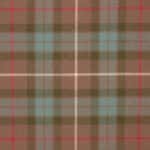
The same pattern in different depths of colour. Any of them can be made up in any style above.
All 2,107 tartans are available to order, and any of them can be cut into any style on this page.
 Modern
 Weathered