
Home › Tartans › Douglas Green Muted
A Scottish clan and family tartan, available to order. Everything we make in Douglas Green Muted: kilts, kilted skirts, accessories and full Highland outfits, every piece cut to your own measurements.
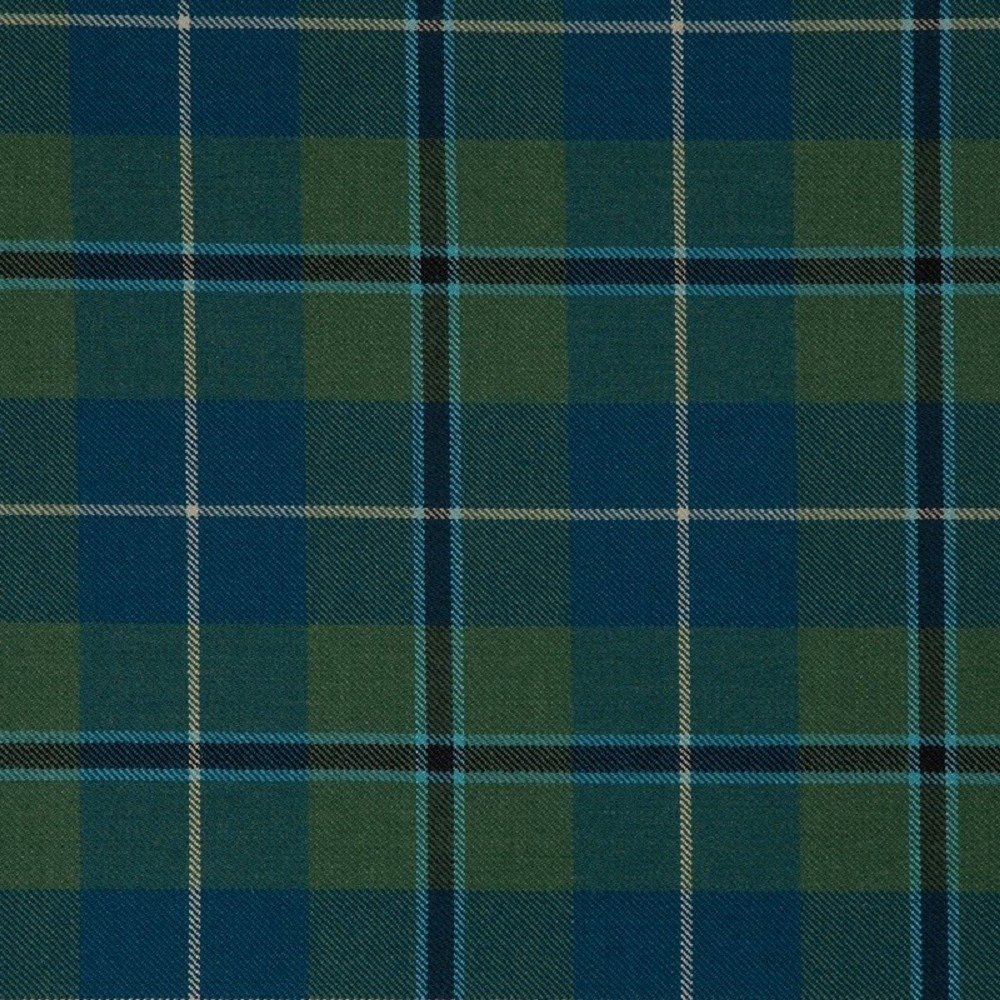 Muted
Muted Douglas Green
The Douglas Green Muted tartan, made to order by Handmade Kilt. Choose it for a kilt, a kilted skirt, an accessory or a full Highland outfit — everything below is cut to your own measurements.
Choose your product
Everything below can be made in the Douglas Green Muted tartan. Choose a product, then pick your size and options on the next page — the tartan is already selected for you.

Available in Douglas Green Muted
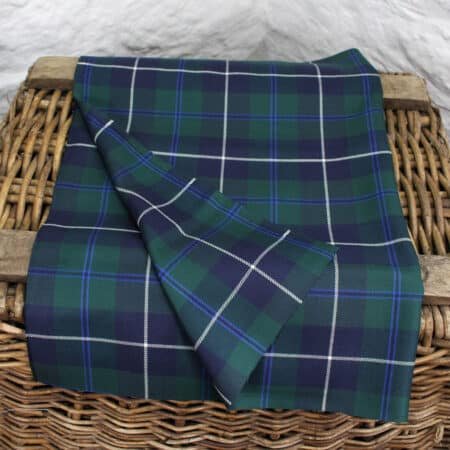

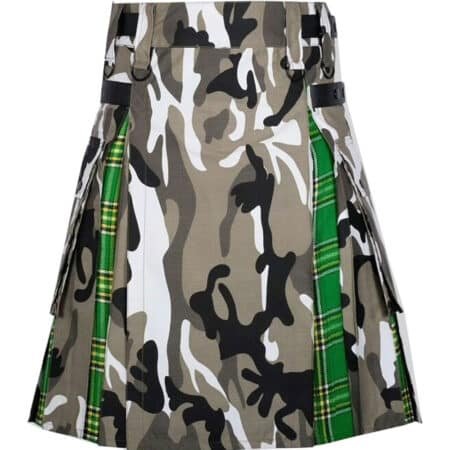

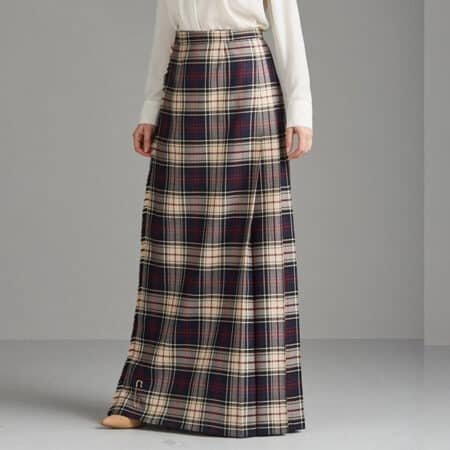
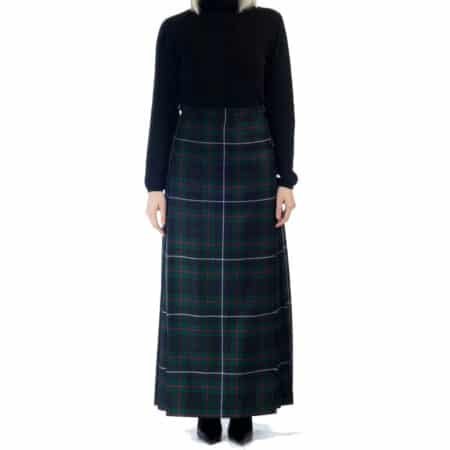

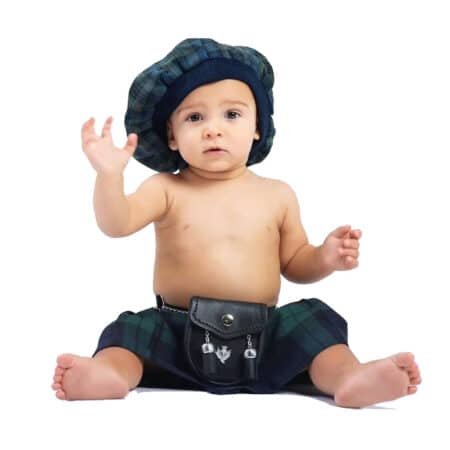
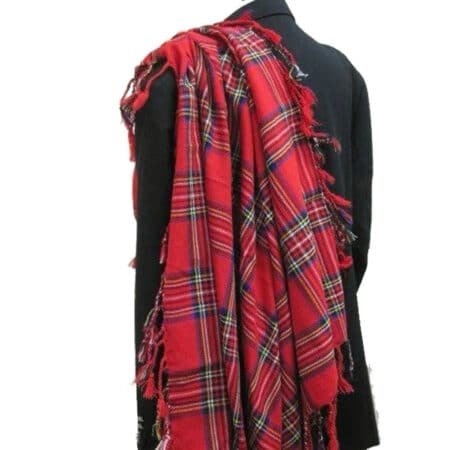


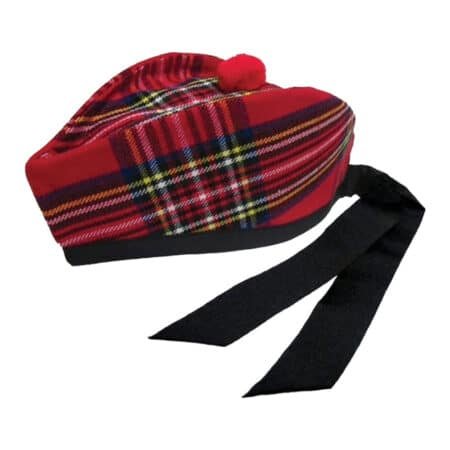
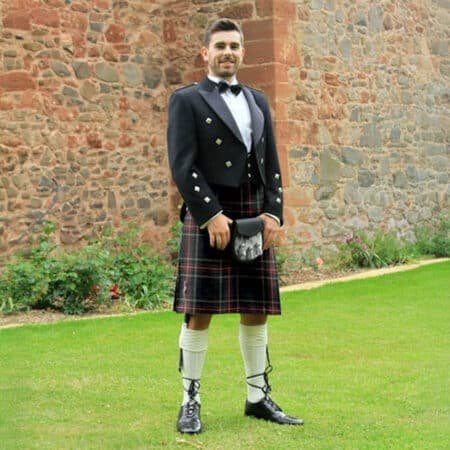
Available in Douglas Green Muted
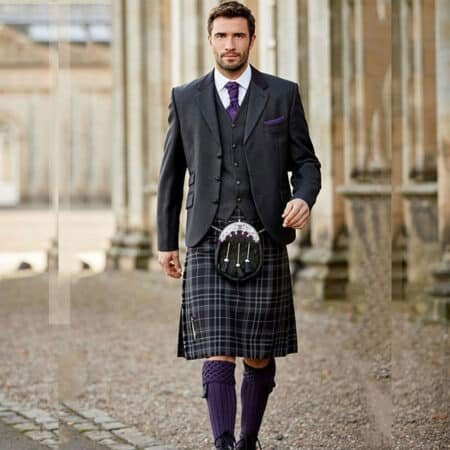
Available in Douglas Green Muted
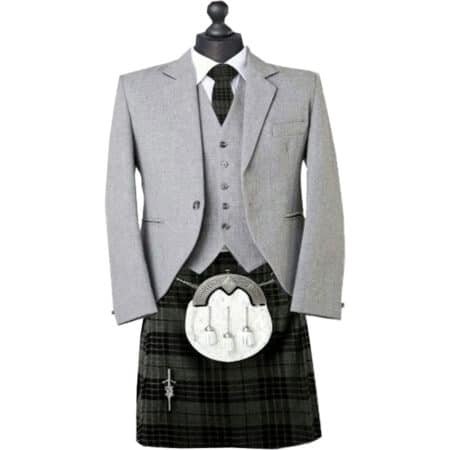
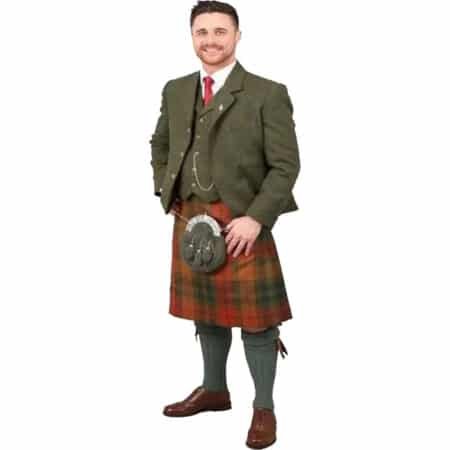
Available in Douglas Green Muted
The sett
Douglas was for two centuries the most dangerous surname in Scotland, and it is now one of the few great names with no chief at all, which leaves its dark green and navy sett answerable to nobody.
The name is taken from Douglas Water in Lanarkshire, and the elements are Gaelic: dubh for dark and glas for stream. The first man on record is William de Douglas, who witnessed a charter by the Bishop of Glasgow in favour of the monks of Kelso at some point between about 1175 and 1199. An older suggestion has a Fleming, Theobaldus Flammatius, receiving land by Douglas Water in 1147 and standing as the family’s progenitor. That Flemish descent has long been argued and never proved; it survives because it is neither demonstrable nor refutable.
James Douglas, born about 1286, is the figure who made the name. The English called him the Black Douglas; Scottish chronicle calls him the Good. He took Roxburgh castle in 1313 and fought at Bannockburn in 1314, and when Robert I was dying he was asked to carry the king’s heart to the Holy Land. He got as far as Spain and was killed at the siege of Teba in 1330. The casket was brought home to Melrose Abbey, and by 1333 the heart had been taken into the Douglas arms, where it has stayed — one of the few clan emblems whose adoption can be dated from documents.
The senior line, the Black Douglases, grew strong enough that the crown could not live with it. In 1440 the sixteen-year-old William, sixth Earl, and his brother David were put through a mock trial and executed at what became known as the Black Dinner. In 1452 James II stabbed William, eighth Earl, at Stirling Castle. In 1455 James, ninth Earl, rebelled and his forces were broken at Arkinholm; the lands were forfeited and Black Douglas power ended there.
What survived was the junior Red Douglas line, descended from George, first Earl of Angus, who lived from 1380 to 1403 and was born outside marriage. The Red Douglases inherited the family position in national politics: Archibald, fifth Earl, earned the nickname Bell the Cat, and the sixth Earl married Margaret Tudor, sister of Henry VIII, became guardian of James V and fathered Margaret Douglas, grandmother of James VI. In 1660 William Douglas, brother of the second Marquess of Douglas, became Duke of Hamilton through marriage, and the Douglas titles gathered in time to that house.
The Lord Lyon recognises no chief of Clan Douglas, for a reason that is procedural rather than historical. The senior representative of the name is the Duke of Hamilton, Alexander Douglas-Hamilton being the sixteenth. Because his surname is Douglas-Hamilton rather than Douglas, the practice of the Lyon Court on the naming of chiefs prevents him from taking up the chiefship while he uses the compound form. This matters for the tartan, because there is no authority here to grant or withhold anything.
The dark green and navy Douglas sett is first recorded in James Logan’s The Scottish Gaël, or Celtic Manners, as Preserved among the Highlanders, published in 1831. Logan, an Aberdeen man who lived from 1797 to 1872, had spent a decade walking the Highlands collecting material, and later wrote the text for R. R. McIan’s Clans of the Scottish Highlands. His book is an observer’s record and is treated as more trustworthy than what came next.
What came next was the Vestiarium Scoticum of 1842, which also assigned Douglas patterns, including a grey one. That book was compiled by John and Charles Allen, who claimed royal Stuart descent and a sixteenth-century manuscript from the Scots College at Douay; neither claim stood up and the manuscript was never produced for inspection. A Douglas pattern of 1831 therefore has a better provenance than most Lowland setts, but nothing pushes it back before the tartan revival.
The sett has had a long military life independent of the family. It was worn by the Cameronians, the Scottish Rifles, and is worn now by the Royal Gurkha Rifles; officers of Scottish squadrons of the Royal Air Force have used the grey version in mess dress. That continuous use is arguably the strongest claim the pattern has to being more than a page in a book.
Anyone of the name, and anyone from the associated families that attached themselves to the Douglas interest, may wear it. Since there is no chief, there is nobody to consult and nobody to offend, and the honest answer to the question of permission is that it does not arise. Douglas setts vary in how dark the blue reads against the green, so two kilts of the same name can look quite different depending on the finish.
Sources: James Logan, The Scottish Gaël, 1831; Clan Douglas, Wikipedia; Vestiarium Scoticum, Wikipedia; James Logan, Wikipedia; Scottish Register of Tartans.
Near neighbours
The same pattern in different depths of colour. Any of them can be made up in any style above.
All 2,107 tartans are available to order, and any of them can be cut into any style on this page.