Every kilt made to your measurements · 2,100+ tartans · Expert sizing help
Home › Tartans › Cumming Modern
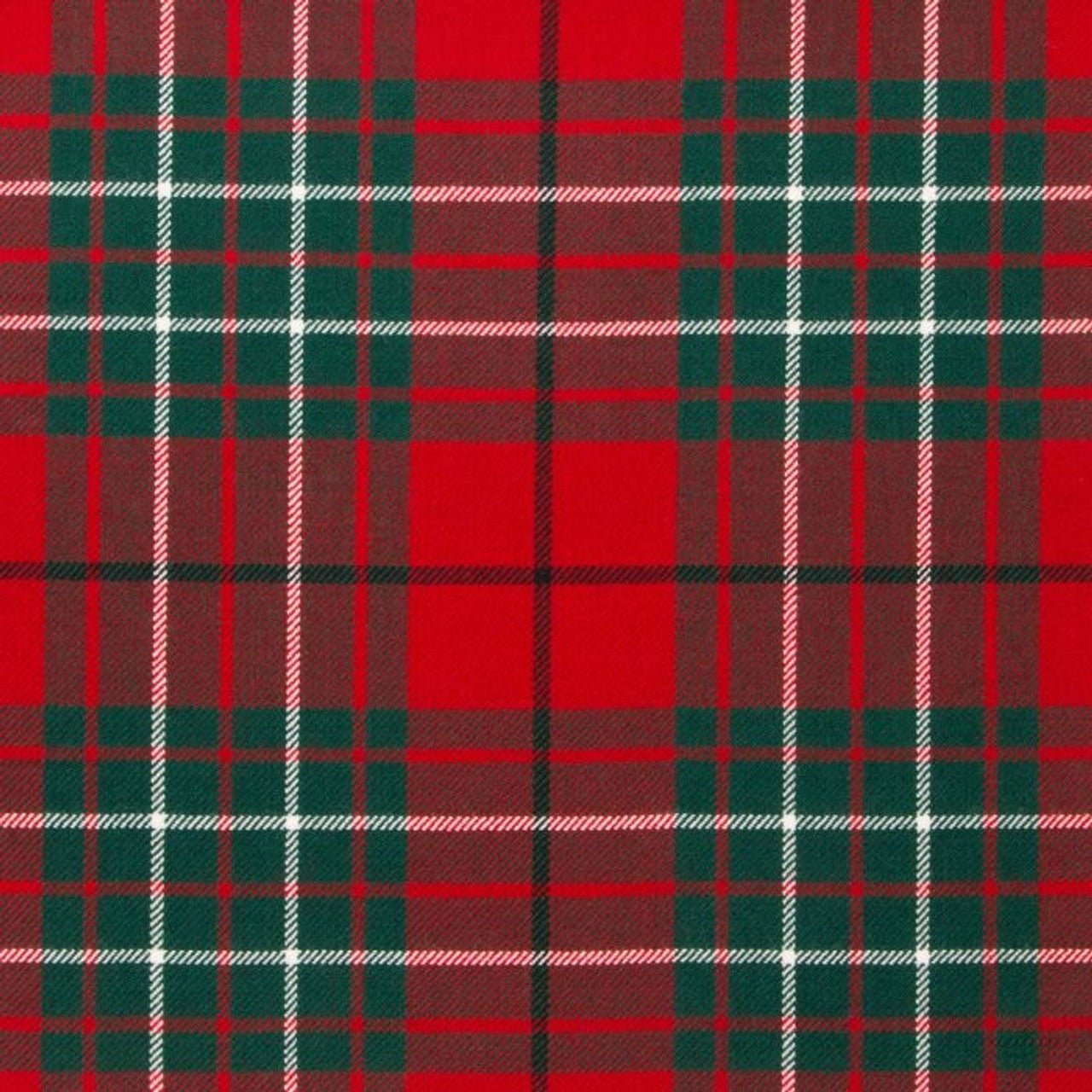
A clan and family tartan, available to order. Everything we make in Cumming Modern: kilts, kilted skirts, accessories and full Highland outfits, every piece cut to your own measurements.
 Modern
The Cumming Modern tartan, made to order by Handmade Kilt. Choose it for a kilt, a kilted skirt, an accessory or a full Highland outfit — everything below is cut to your own measurements.
Choose your product
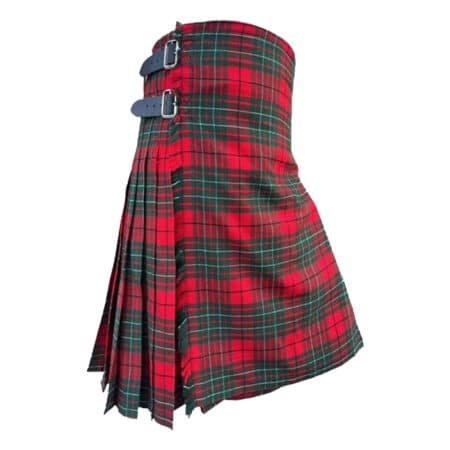
Everything below can be made in the Cumming Modern tartan. Choose a product, then pick your size and options on the next page — the tartan is already selected for you.
Available in Cumming Modern

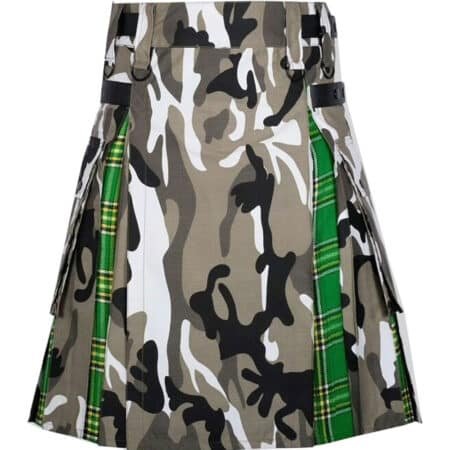

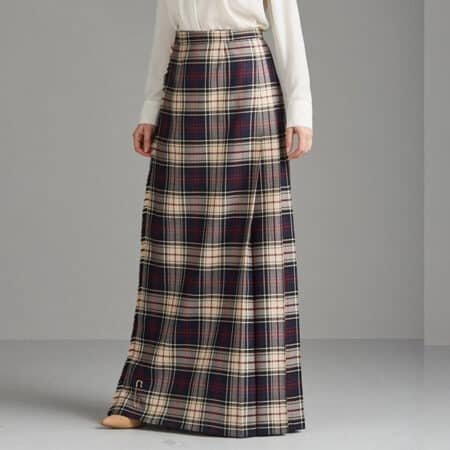
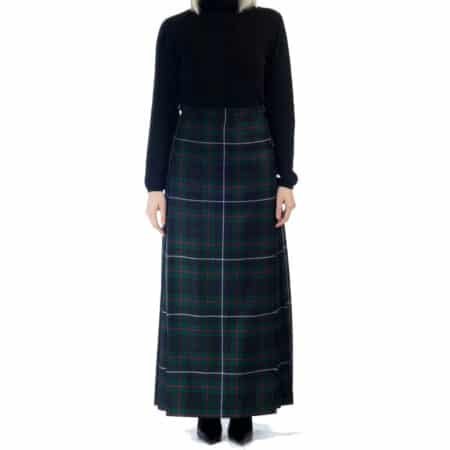

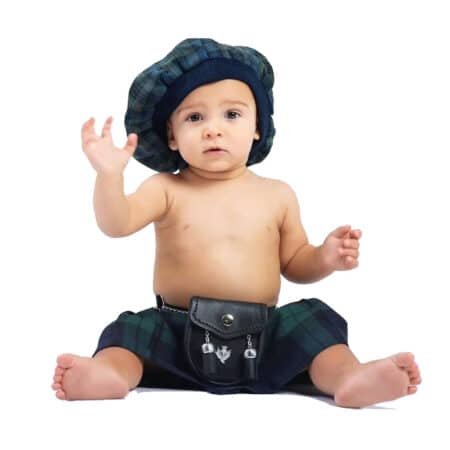
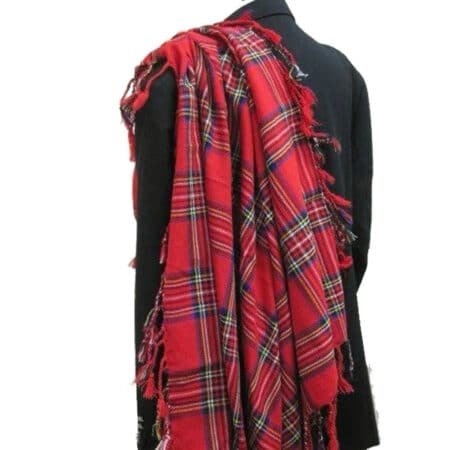


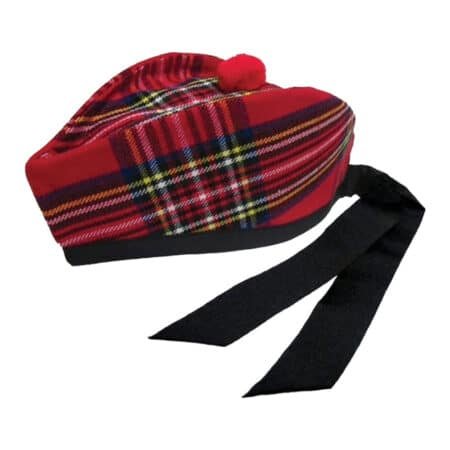
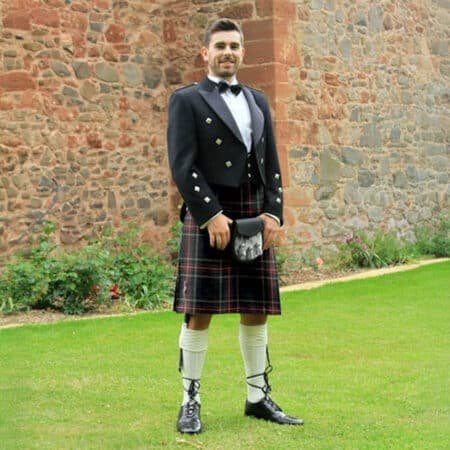
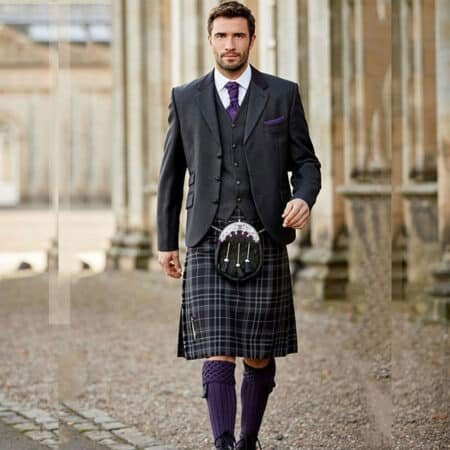
Available in Cumming Modern
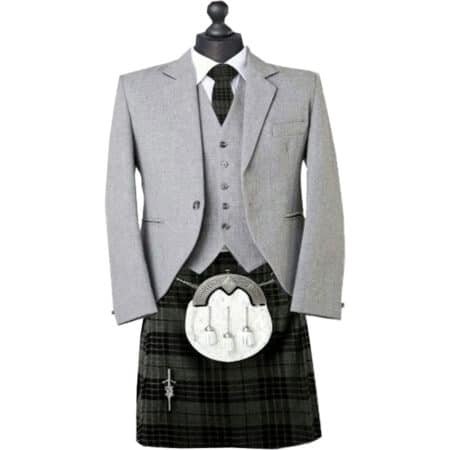
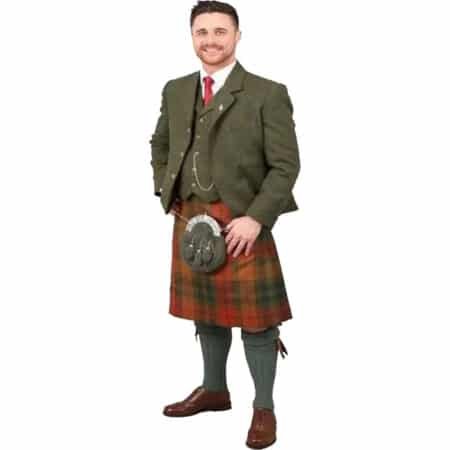

Available in Cumming Modern

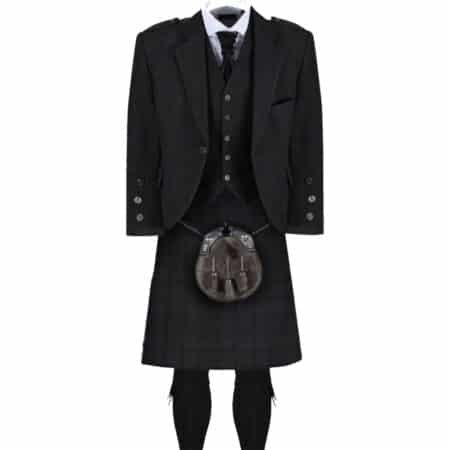
Available in Cumming Modern

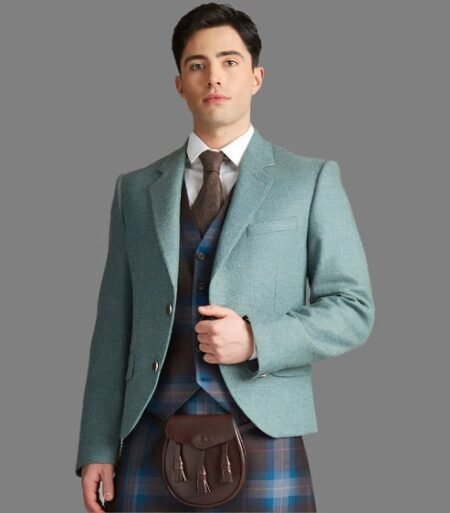


Available in Cumming Modern
The sett
For a century the Comyns were the strongest family in Scotland, and the reason the name is now a minor one is a single killing in a Dumfries friary.
The family was Norman or Flemish in origin, of the kind David I brought north and settled on Scottish land. The surname points to one of two places in France, either Bosc-Bénard-Commin near Rouen or Comines near Lille, and the evidence does not choose between them. The first of the name in Scotland to matter was William Cumin, chancellor to David I; the Scottish line proper descends from his nephew Richard Comyn, whose wife Hextilda was a granddaughter of Donald III, bringing royal blood in at the outset.
Two marriages and one lordship did the work. Richard’s son William Comyn married Marjory, Countess of Buchan, bringing an earldom into the family; William’s son Walter acquired the lordship of Badenoch, with Ruthven as its seat and the Drumochter and Minigaig passes under its control. From there the Comyns assembled a chain of castles running from Inverlochy in the west to Slains in the east, taking in Lochindorb, Blair, Balvenie and Cairnbulg, which gave them the northern lines of communication. The political measure of their position is simpler than the map: three successive heads of the family held the justiciarship of Scotia, the chief administrative office in the kingdom, for sixty-six years between 1205 and 1304.
John III Comyn of Badenoch, the Red Comyn, was the leading figure in Scotland between 1302 and 1304, and beat an English force at Roslin on 23 February 1303 while outnumbered. On 10 February 1306 he met Robert Bruce in the Greyfriars church at Dumfries and was killed there. What happened is not agreed. One account has Comyn refusing to break the oath he had given Edward I; another has Bruce striking him at the high altar and Bruce’s companions finishing the work. Sir Robert Comyn, uncle to the chief, died trying to defend him. The consequences were total: the Red Comyn’s son was beaten at Inverurie and killed at Bannockburn in 1314 fighting on the English side, Adomar Comyn died two years later as the last male of the Badenoch line, and both Badenoch and Buchan were forfeited. The Badenoch lands went to the Macphersons, who had supported Bruce.
What survived was a Highland family rather than a magnate house. The Cummings of Altyre in Moray were recognised as chiefs, and the present chief, Sir Alexander Penrose Gordon-Cumming of Altyre, traces his descent from that same Sir Robert Comyn who died at Dumfries. The fifteenth and sixteenth centuries were spent in hard local quarrels over Nairnshire ground, chiefly with Macpherson, Shaw and Brodie. In 1424 Comyns took the Mackintosh lands of Meikle Geddes and Rait and Malcolm Mackintosh answered in kind; the story of the killing of Comyn hosts by their Mackintosh guests at a feast in Rait Castle belongs to tradition rather than to record. In 1550 Alexander Brodie, chief of his name, was denounced as a rebel along with a hundred others for an attack on the Cummings of Altyre.
The pattern is a nineteenth-century one, like most named clan setts. It appears in the Vestiarium Scoticum of 1842, spelled Cymyne, and an almost identical design was published by James Logan under the name MacAulay and illustrated by R. R. McIan in The Clans of the Scottish Highlands of 1847. What the trade produces as Cumming is not quite the Vestiarium version: the book has an extra narrow green line which the accepted sett lacks. The trade pattern was certified by William and Andrew Smith of Mauchline in 1850, who stated that they had received it from Sir W. G. Gordon Cumming as head of the family, and claimed the sanction of the chief for it. Against all of this stands one earlier scrap: an order for Cummings appears in the Wilsons of Bannockburn letters under 1821, twenty years before the book.
The hunting Cumming is a separate problem. It is asymmetric, which is rare, and James Scarlett took it to be a garbled rendering of a pattern recorded in an early collection as Cumming and Glenorchy, the word being and rather than of.
There is a chief at Altyre, and the sett has been associated with the head of the family since 1850, so anyone of the name in its various spellings, Cumming, Cummin, Comyn or Cumine, may wear it, as may anyone descended from a Cumming line. The odd consequence of the Logan and McIan confusion is that a MacAulay may look at the same pattern with an equally good claim to it.
Sources: Clan Cumming, Wikipedia; Vestiarium Scoticum, Wikipedia; Scottish Tartans Authority, tartan ferret records for Cumming 1850 and Cumming Hunting, citing the Wilsons of Bannockburn letters and James Scarlett; William and Andrew Smith, Authenticated Tartans of the Clans and Families of Scotland, 1850; R. R. McIan, The Clans of the Scottish Highlands, 1847.
All 2,107 tartans are available to order, and any of them can be cut into any style on this page.