
Home › Tartans › Campbell Ancient
A clan and family tartan, available to order. Everything we make in Campbell Ancient: kilts, kilted skirts, accessories and full Highland outfits, every piece cut to your own measurements.
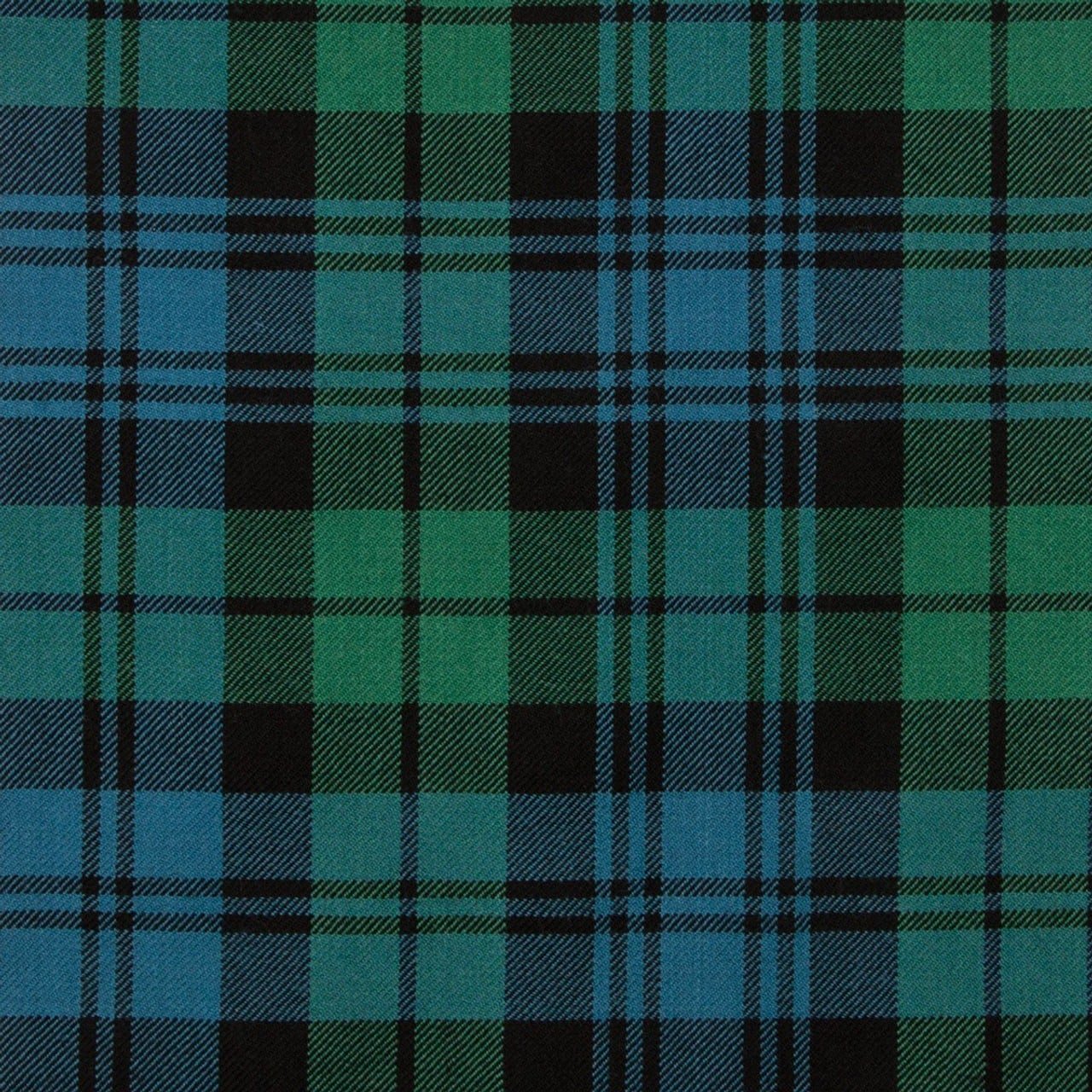
The Campbell Ancient tartan, made to order by Handmade Kilt. Choose it for a kilt, a kilted skirt, an accessory or a full Highland outfit — everything below is cut to your own measurements.
Choose your product
Everything below can be made in the Campbell Ancient tartan. Choose a product, then pick your size and options on the next page — the tartan is already selected for you.
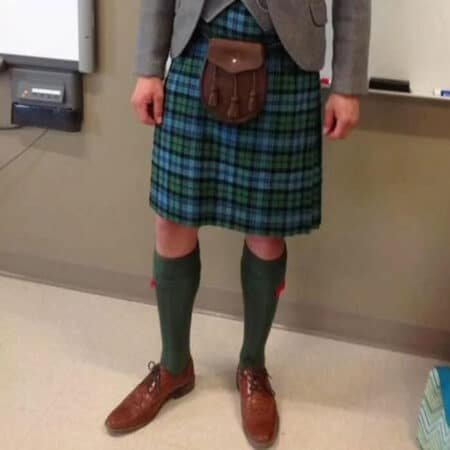
Available in Campbell Ancient
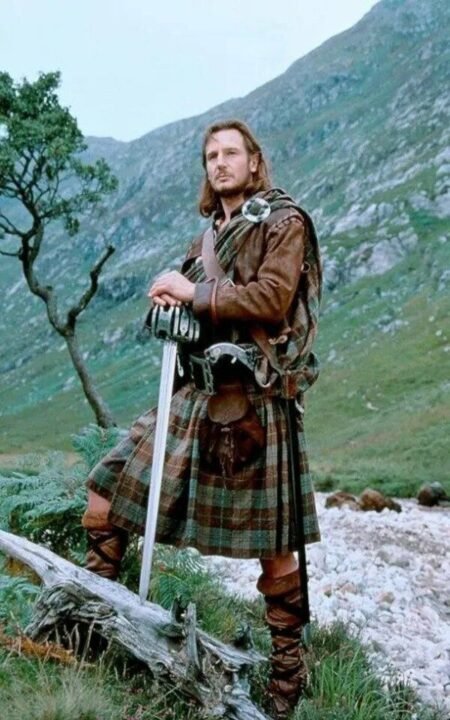

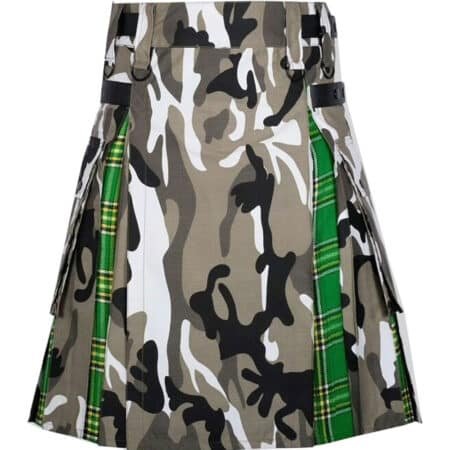

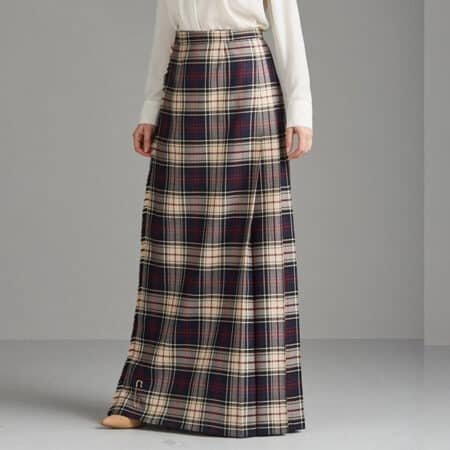
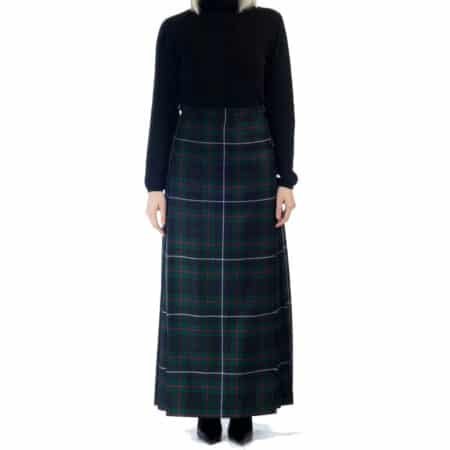

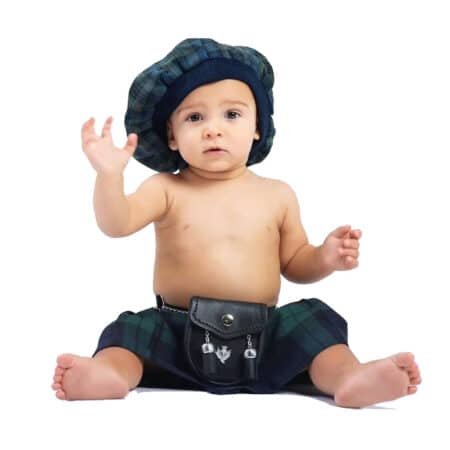
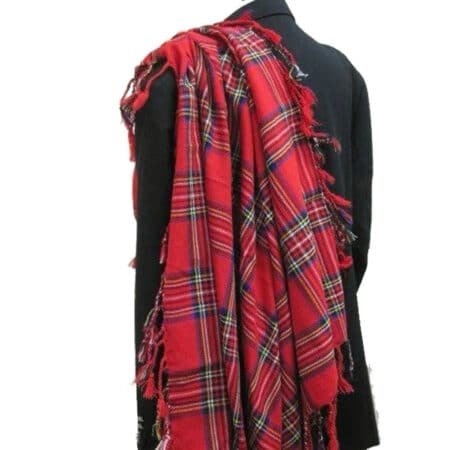


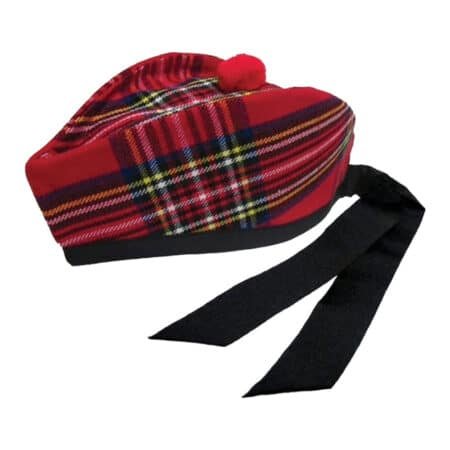
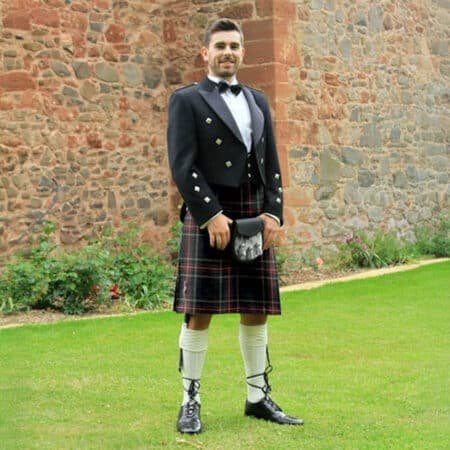
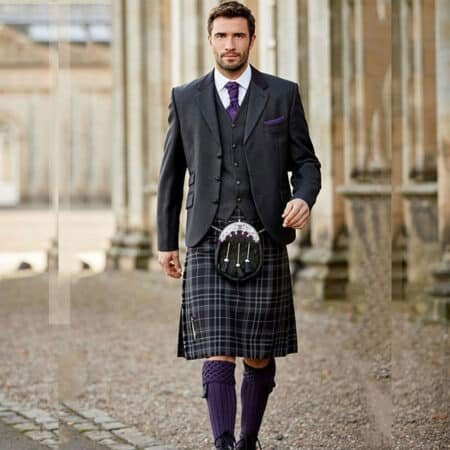
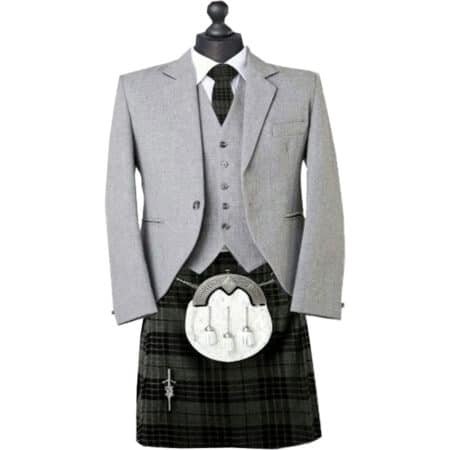
Available in Campbell Ancient
The sett
The cloth most people meet as Black Watch and the cloth the Duke of Argyll wears are the same sett, and which of them has the older claim on it is the one Campbell question the record declines to close.
The surname comes from the Gaelic cam, crooked, and beul, mouth — a personal nickname for someone wry-mouthed, applied to an ancestor and then inherited by everyone descended from him. A Latin-Norman derivation from de Campo Bello has circulated in print for centuries without ever displacing the Gaelic reading. The kindred itself was known first as Clann Ó Duibhne and later styled Clann Diarmaid after a hero of Gaelic legend, and the earliest Campbell to appear in writing is a Gillespie recorded in 1263, with early grants to him and his relatives in east-central Scotland rather than in Argyll. The Argyll footing came by marriage to an Ó Duibhne heiress, which brought in the lordship of Loch Awe.
Two men fixed the family’s course. Cailean Mòr, Sir Colin Campbell, was killed by MacDougalls in 1296 at the fight known as the Red Ford, and every chief since has used MacCailein Mòr as his Gaelic style. Sir Neil Campbell, who died in 1316, stayed with Robert I through the years when that was a poor bet, and was rewarded with the king’s sister Mary in marriage and with Argyll land confiscated from Bruce’s enemies, the MacDougalls chief among them. That is the hinge of Campbell history. The family acquired Argyll largely by royal grant rather than by conquest, and went on using the same method for four hundred years.
The early seat was Innis Chonnel, a stone castle of the thirteenth century on a small island in Loch Awe, in Campbell hands from at least 1308. Colin Campbell, created first Earl of Argyll in 1457, moved the household to Inveraray, and the island castle became the earls’ prison, held for them by captains drawn first from the MacArthurs and afterwards the MacLachlans. Dòmhnall Dubh MacDonald, heir to the forfeited Lordship of the Isles, was among those kept there. The dukedom of Argyll followed in 1701; Torquhil Campbell is the thirteenth duke.
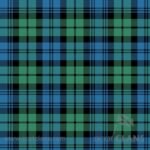
The blue, black and green sett was appointed for the Independent Highland Companies in 1725 and then for the regiment authorised in 1739, mustered at Aberfeldy in 1740, which became the 42nd and is remembered as the Black Watch. Black Watch is not a different pattern but the same threadcount in darker dye shades. In Argyll and Sutherland Highlanders service the pattern carries the official designation Government No. 1A, Black Watch being No. 1.
Whether Campbells wore it before the army did is genuinely unresolved. The Scottish Tartans Authority records the possibility that they did, and attaches the caution that a good many other people probably wore this sett or something close to it before anyone thought of tartan as a clan badge. That caution matters more than the claim. A simple dark check of blue, black and green is exactly what an eighteenth-century Highland weaver would produce from indigo and local dyestuffs, and reading a family monopoly into it asks the evidence to do more than it can. What is documented is that the present duke wears the sett and has approved it.
Alastair Campbell of Airds, the clan’s own historian, set out in Campbell Tartan (1985) that four patterns carry chiefly authority: Campbell itself, Campbell of Cawdor, Campbell of Breadalbane and Campbell of Loudoun. Everything else sold under the name is trade. A dress Campbell on a white ground first appeared in Clans Originaux, published in 1880 by the Paris firm J. Claude Frères et Cie; the 12th Duke declined to accept it as a Campbell tartan and the 13th declined again in March 2015. Campbell of Argyll has had the same treatment from a run of chiefs. Both continue to be woven and sold, which is a useful reminder that in tartan the trade, not the chief, decides what exists.
A more entertaining example is the so-called Campbell Hunting, a gaudy multicolour affair thought to have originated in Toronto around 1945. Airds observed that whatever its inventor was hunting in such plumage was hard to imagine. No modern weaver has troubled to revive it.
The plain Campbell sett is the Government tartan. It has clothed regiments, pipe bands and several generations of people with no Campbell connection whatever, and no Campbell has any standing to object; it is one of the handful of patterns that genuinely belong to everybody. The question of entitlement only arises with the branch setts — Cawdor, Breadalbane, Loudoun — and even there it is manners rather than law. Colour settings do not change the answer: a lighter or muted dyeing of the same threadcount is the same tartan.
Sources: Wikipedia, Clan Campbell, Campbell (surname) and Innes Chonnel Castle; Clan Campbell Society (North America), tartan and castle pages; Alastair Campbell of Airds, Campbell Tartan (1985), as cited by the Clan Campbell Society; Scottish Tartans Authority tartan database notes; Scottish Register of Tartans.
Near neighbours
The same pattern in different depths of colour. Any of them can be made up in any style above.
All 2,107 tartans are available to order, and any of them can be cut into any style on this page.
 Campbell
 Ancient